This site uses cookies to improve your user experience. Read our Privacy Policy




By Bohdan Vasylkiv
- CEO & Co-Founder
Construction Site Inspection Guide: Safety Checks, Checklist & Best Practices
Learn what a construction site inspection is, how to conduct one, and use a practical construction site inspection checklist to improve safety and compliance.
Key Takeaways
- Regular construction safety inspections prevent accidents, reduce liability, and keep projects on schedule.
- A solid construction inspection checklist turns a chaotic walkthrough into a repeatable, reliable process.
- Knowing who is responsible for each inspection stage eliminates confusion and accountability gaps.
- Technology, from mobile apps to real-time data platforms, is making every stage of the inspection process faster and more accurate than ever.
If you manage or oversee construction projects, you already know things can go sideways fast. Missed defects, overlooked hazards, incomplete documentation — any of these can spiral into costly delays or serious injuries. That's exactly why a thorough construction site inspection process matters. It's about protecting your crew, your budget, and the quality of the final build.
This guide walks you through everything you need to know: starting with “what is a construction site inspection?” in practical terms, then covering how to conduct one, what to put on your checklist, and how technology is changing the game.
What Is a Construction Site Inspection?
So, what is a construction site inspection? Simply put, it's a structured evaluation of a job site that covers safety conditions, work quality, regulatory compliance, and overall progress. An inspector, or sometimes a site manager, walks the site with a defined scope, identifies issues, and documents findings.
Here's the thing: it's not just one event. Site inspections happen at multiple stages, from pre-construction through final handover. Early ones might check soil conditions and permits. Mid-project inspections zero in on structural integrity, electrical systems, and worker safety. Final inspections confirm everything meets code before occupancy.
The goal isn't to catch people doing things wrong. It's to catch problems early, when they're still cheap to fix. A thorough site inspection is one of the most effective risk management tools you have.
Why Construction Site Inspections Matter
Safety and Risk Prevention
Construction sites are inherently dangerous: heavy equipment, working at height, exposed wiring, unstable structures. Regular construction safety inspections are your first line of defense. They help you identify fall risks, faulty scaffolding, missing guardrails, and other hazards before someone gets hurt. Honestly, the cost of a thorough inspection is nothing compared to the cost of a serious workplace injury.
Compliance With Regulations
Every jurisdiction has its own building codes, OSHA requirements, and environmental regulations. Failing to comply doesn't just mean fines; it can mean project shutdowns and legal liability. A well-executed construction safety inspection ensures you're meeting all applicable standards throughout the project lifecycle.
Quality Control and Project Success
Inspections aren't only about safety. They're also your best tool for catching quality issues — improperly mixed concrete, misaligned framing, drainage problems — before they become expensive rework. When you tie your construction site inspection process to clear quality benchmarks, you dramatically reduce callbacks and warranty claims.
Types of Construction Site Inspections
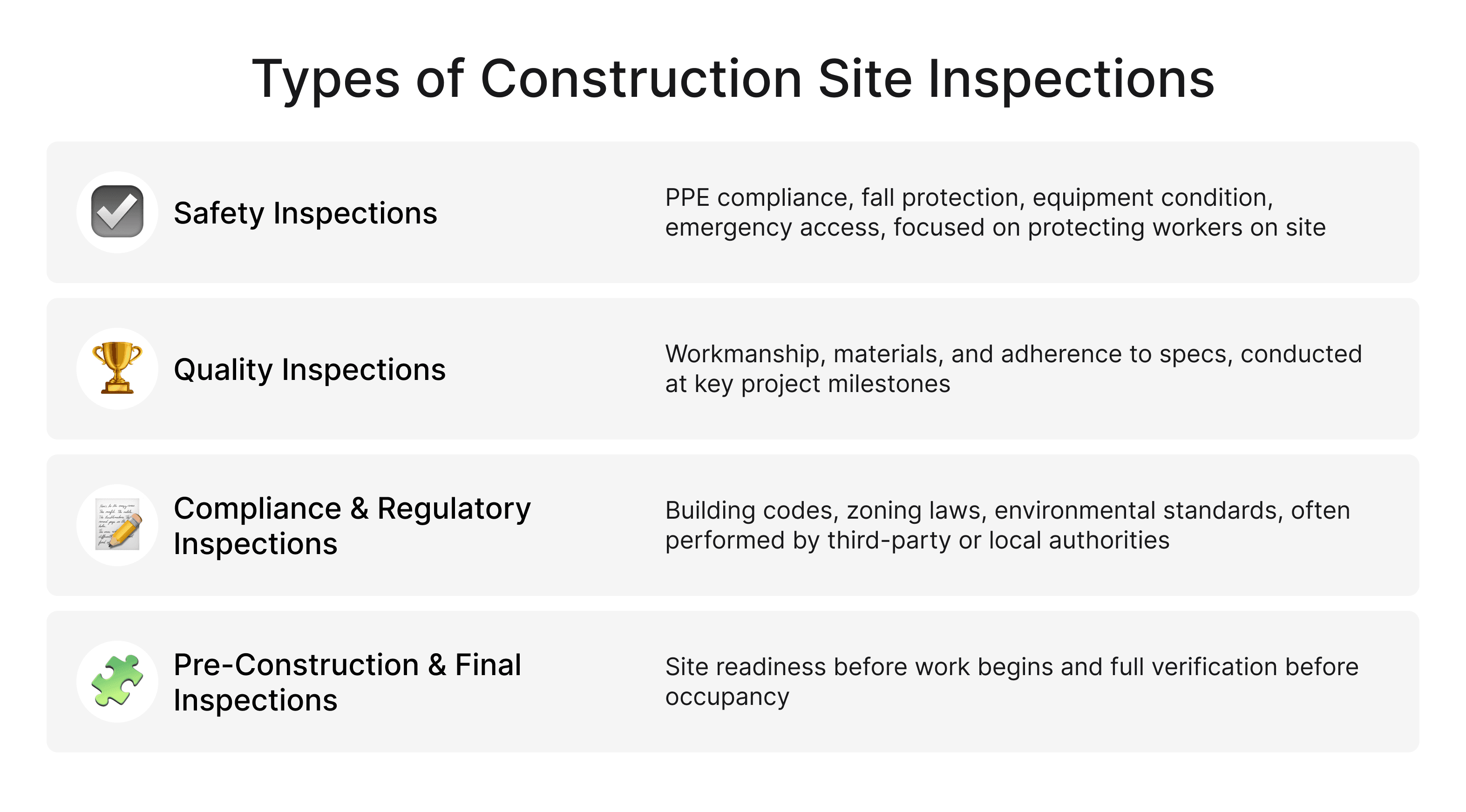
Safety Inspections
These focus on worker safety and site conditions: PPE compliance, equipment condition, fall protection, fire safety, and emergency exit access. Safety-focused site inspections should be frequent and consistent — daily walkthroughs are common on active sites.
Quality Inspections
Quality inspections examine workmanship, materials, and adherence to project specifications. They typically happen at key milestones: after foundation work, framing, electrical rough-in, and so on.
 Click to expand
Compliance and Regulatory Inspections
These are often performed by third-party inspectors or local building authorities. They verify that work complies with building codes, zoning laws, and environmental standards. Failing a regulatory inspection can halt your entire project, so your internal checks should be thorough enough that official inspections are a formality.
Pre-Construction and Final Inspections
Pre-construction inspections evaluate site readiness: soil testing, utility locations, access routes, and permit verification. Final inspections confirm the completed project meets all contractual and regulatory requirements before occupancy. Both are critical bookends to a construction safety audit.
When and How Often Should Inspections Be Conducted?
Key Inspection Stages
Construction site inspection naturally aligns with project phases. Before construction, verify permits, assess environmental conditions, and confirm site safety. During the project, inspect at critical milestones: foundation, framing, mechanical, electrical, plumbing, and finishing. After completion, a final walkthrough verifies that all work meets specifications and code.
Recommended Inspection Frequency
There's no one-size-fits-all answer; it depends on complexity, risk level, and local requirements. As a general rule: safety walkthroughs daily, quality construction site inspection at every major milestone, compliance checks per your building authority's schedule. Bottom line: more frequent inspections cost less than the problems they prevent.
Who Is Responsible for Construction Site Inspections?
Roles and Responsibilities
Multiple people share the responsibility. Project managers set the schedule. Site supervisors handle daily safety checks. Dedicated inspectors cover milestone and compliance reviews. Subcontractors own their work quality, but the general contractor ultimately owns the inspection process across the entire site.
Inspectors vs. Site Managers
Here's a distinction that matters: site managers oversee day-to-day operations, while inspectors evaluate conditions against standards. In practice, site managers handle daily safety walkthroughs, and dedicated inspectors come in for milestone reviews. On smaller projects, one person may wear both hats, but the construction site inspection mindset must stay objective.
Not sure where to start with your site inspection workflow?
We can help you figure out what's actually slowing you down and what to build first.
How to Conduct a Construction Site Inspection
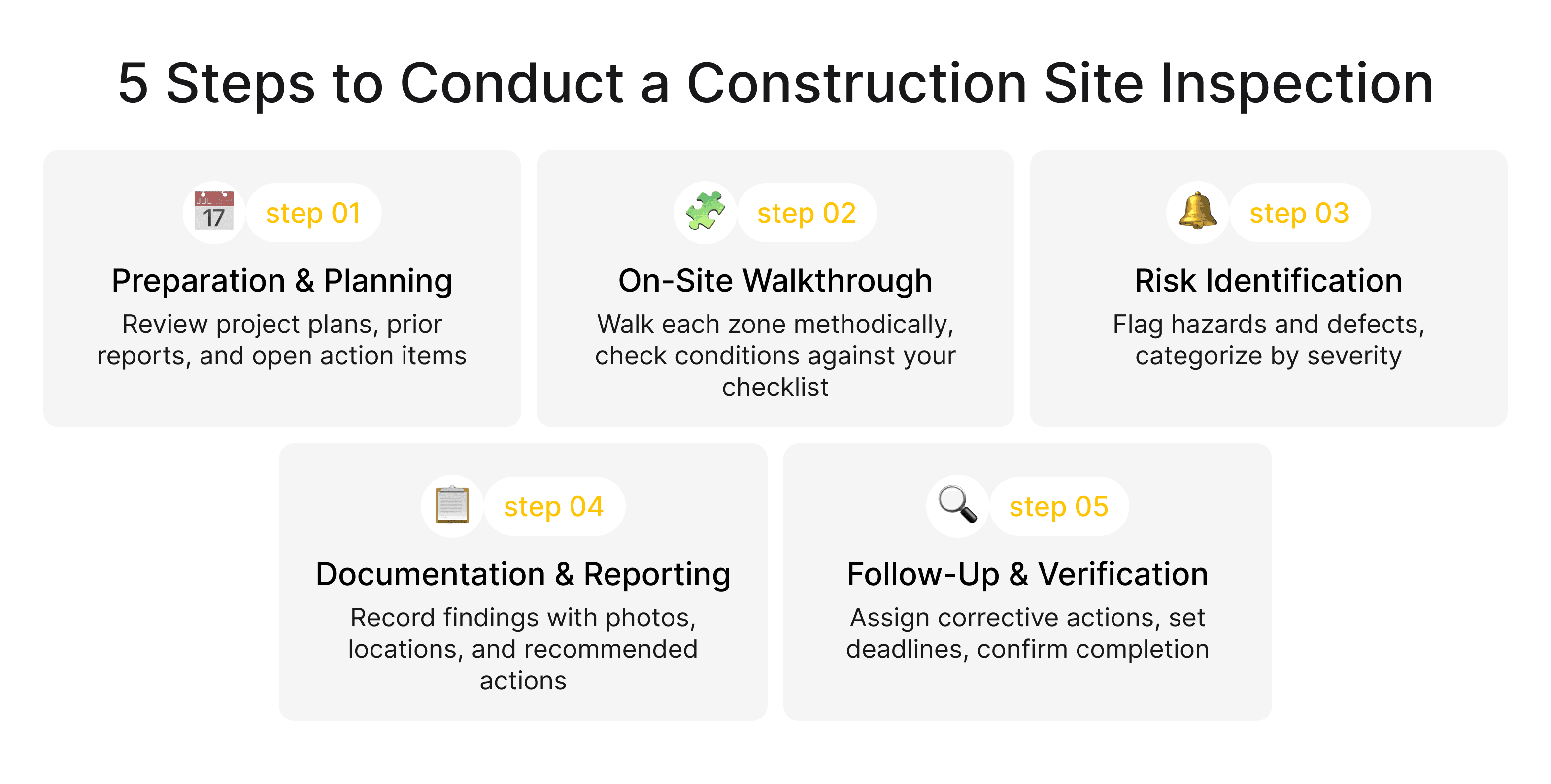
If you've ever wondered how do you conduct a construction site inspection effectively, here's the breakdown.
Step 1. Preparation and Planning
Start before you arrive on site. Review project plans, previous inspection reports, and open action items. Know the project's current phase. Bring your construction inspection checklist, on paper or a tablet, so you don't rely on memory.
Step 2. On-Site Inspection Process
Walk the site methodically, don't just wander. Follow a logical route covering every active work zone. Check structural elements, temporary supports, electrical installations, fire safety equipment, and worker behavior. Talk to workers — they often know about unreported issues.
 Click to expand
Step 3. Identifying Risks and Issues
Note hazards, defects, and deviations from plans. Categorize by severity, a missing guardrail on the fourth floor is more urgent than a slightly off-spec paint color. This prioritization helps allocate follow-up resources effectively.
Step 4. Documentation and Reporting
Document everything: photos, notes, measurements, locations. A construction site inspection report should be clear enough that someone who wasn't there can understand exactly what was found. Good documentation also protects you legally if there's ever a dispute.
Step 5. Follow-Up Actions
A construction site inspection without follow-up is a waste of time. Assign corrective actions to specific people, set deadlines, and track completion. The next inspection should verify that previous issues have been resolved. This feedback loop is what turns a construction safety audit from a one-time event into a continuous improvement process.
Construction Site Inspection Checklist
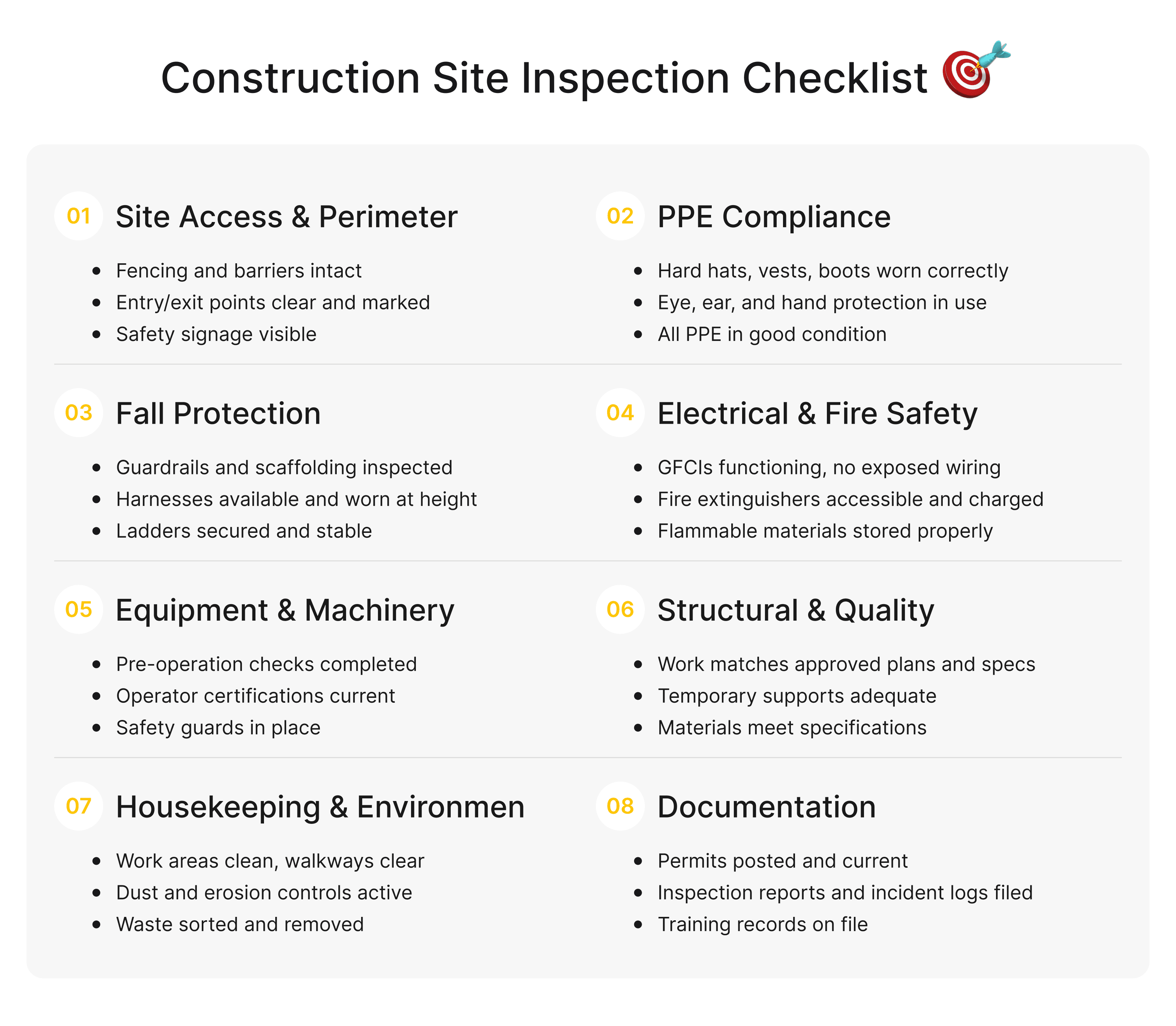
A good construction site inspection checklist keeps your process consistent and ensures nothing falls through the cracks. Here's a practical framework:
 Click to expand
Common Mistakes in Construction Site Inspections
Inconsistent Inspections
The biggest mistake? Treating inspections as something you do only when there's a problem or when an auditor is coming. Construction safety inspections need to happen on a regular schedule, regardless of how smoothly things seem to be running. Inconsistency creates blind spots, and blind spots create risk.
Poor Documentation
If it's not documented, it didn't happen, at least from a legal standpoint. Vague notes like "looked okay" don't cut it. Every finding should include the specific location, a photo, a description, and a recommended action. More effort up front saves enormous headaches later.
Ignoring Safety Protocols
It sounds obvious, but it happens more than you'd think. Workers skip PPE because it's hot. Supervisors look the other way on minor violations to avoid delays. These small compromises accumulate. A construction site safety inspection that doesn't enforce protocols consistently is barely doing its job.
Construction Inspection Reports: What to Include
A thorough construction site inspection report should cover: date, time, and weather; the inspector's name; scope and areas inspected; findings with photos; risk severity ratings; corrective actions with deadlines; and a sign-off section.
Keep your reports standardized. When everyone uses the same format, it's easier to spot trends, track recurring issues, and demonstrate due diligence during audits. If you're still using paper forms, going digital pays for itself almost immediately and opens the door to automating the collection of construction project data across your operation.
How Technology Improves Construction Site Inspections
Let's be honest: the construction industry has been slow to adopt technology. But that's changing fast, and companies embracing digital tools for construction site inspection are seeing real results.
Mobile Inspection Apps
Mobile apps let inspectors complete checklists, take geotagged photos, add annotations, and submit reports — all from their phone, right on the job site. No more scribbling notes on a clipboard and transcribing them later. The data is captured in real time, standardized, and instantly available to everyone who needs it. This is a game-changer for construction site safety inspection workflows.
Automation and Real-Time Data
IoT sensors can monitor structural movement, temperature, humidity, and air quality in real time. Drones capture site imagery for progress tracking and hard-to-reach areas. Combined with real-time construction site mapping, these tools give you a live picture of your site without physically walking every corner daily. And with automated permit tracking systems, you can close the loop on regulatory compliance without manual paperwork piling up.
Digital Checklists
Digital checklists do more than replace paper. They enforce completeness — inspectors can't skip a section. They automatically capture timestamps and GPS data, generate reports with a single tap, and create a searchable archive of every inspection — invaluable for trend analysis and audit preparation.
If your current tools feel generic or limited, it might be worth exploring custom construction inspection platforms built around your actual workflow. That's where a team like Incora comes in — we build industry-specific digital solutions for construction and other complex industries, offering software development consulting services all the way through to full product delivery.
Conclusion
Site inspection work isn't glamorous, but it's among the most important on any project. When done consistently, inspections protect your people, your timeline, and your bottom line. They catch small problems before they become costly ones and provide documented proof that your project was built right.
Build a process you can stick to — clear checklists, defined responsibilities, proper documentation, and the right technology. Companies that treat inspections as a core workflow consistently deliver safer projects on time.
FAQ
What is a construction site inspection?
It's a formal evaluation of a job site covering safety conditions, work quality, regulatory compliance, and project progress. These evaluations happen before, during, and after construction to catch hazards, defects, and code violations early.
What is included in a construction inspection checklist?
A typical checklist covers site access and perimeter security, PPE compliance, fall protection, electrical safety, fire prevention, equipment condition, structural work, housekeeping, environmental controls, and documentation status. The specifics vary by project type and local regulations.
How do you conduct a construction site inspection?
Start with preparation: review project plans, prior reports, and any open items from previous walkthroughs. Then walk the site methodically, checking each zone against your checklist. Pay attention to both obvious hazards and subtle deviations from specs. Document findings with photos and notes, categorize by severity, assign corrective actions to specific people, and follow up to verify completion.
How often should inspections be done?
Safety walkthroughs should happen daily on active sites — no exceptions. Quality checks are best scheduled at major milestones: foundation, framing, mechanical, and finishing stages. Formal compliance inspections follow your local building authority's schedule. Generally, the higher the project risk or complexity, the more frequent your inspections should be. When in doubt, inspect more often rather than less.
What is the difference between inspection and audit?
An inspection evaluates current site conditions — what's physically happening on the ground right now. It's hands-on and focused on specifics. An audit is a broader, more systematic review of your safety management system, policies, procedures, and documentation practices. Simply put, inspections check the work itself; audits check the system and processes governing that work.


