

Hire
Hire Three.js Developers
When you hire three.js developers through Incora, you get engineers who have shipped 3D web products to production — not portfolio demos. Whether you need a single specialist for a visualization sprint or a full 3D engineering team, we match by rendering depth and domain fit.
Hire Three.js Developers for Custom Solutions
Incora covers the full range of Three.js work, from initial scene architecture to long-term performance maintenance. If you need to hire threejs developers matched to specific output types and rendering constraints, we have the right engineers.
Interactive 3D Web Application Development
We build browser-based 3D applications on Three.js — product viewers, real-time scenes, and event-driven interfaces with managed render loops, asset pipelines, and controlled frame budgets.3D Product Visualization and Configurators
Real-time material, color, and geometry configurators tied to product data, with GLTF asset delivery and Draco-compressed geometry for fast load times across devices.WebGL-Based Animations and Visual Effects
Shader-driven visual effects, particle systems, and scroll-triggered scene transitions built for stable performance across desktop and mobile viewports.3D Data Visualization Solutions
Multi-dimensional data translated into navigable 3D chart environments — from financial treemaps to logistics network graphs — with live data binding and camera controls.Why Choose Incora to Hire a Three.js Developer?
Incora has placed Three.js engineers on products where rendering quality and load time directly affect user retention. For three.js developers for hire without the usual screening delays, here is what we deliver.
Most hires know syntax, not the fundamentals of WebGL.
of candidates complete a live shader and draw call test before reaching your shortlist.
GLTF assets arrive unoptimized, pushing load time past 8 seconds.
faster scene load with Draco compression and LOD applied to unoptimized GLTF assets.
3D scenes crash on iOS due to skipped GPU testing on mobile.
of Incora's Three.js engineers run WebGL mobile profiling before handoff.
Hired dev knows Three.js but has no React Three Fiber experience.
of Incora's Three.js placements have already shipped R3F projects.
GPU memory leaks appear weeks after launch in single-page apps.
dispose audit is part of every Incora Three.js code review.
Tools and Technologies We Use
Incora's Three.js engineers work with a complete browser 3D stack across rendering, animation, physics, and frontend integration. When you hire three.js developers through Incora, this is the toolchain they bring from day one.


3D Rendering, WebGL, and Core Libraries
Core rendering stack for building and optimizing 3D scenes directly in the browser.
- Three.js
- WebGL / WebGPU
- Babylon.js
- React Three Fiber (R3F)
- GLSL Shaders


Animation, Interaction, and Visualization Tools
Libraries for scene animation, physics simulation, and data-driven 3D visualization.
- GSAP
- Cannon.js
- D3.js
- Tween.js
- Lottie


Frontend, Integration, and Performance Optimization
Frontend frameworks and tooling for integrating Three.js scenes into production web products.
- React / Vue.js
- Vite / Webpack
- Draco Compression
- glTF 2.0
- Spector.js
Hire Our Three.js Developers
Need to bring 3D rendering capability into an existing product team? Incora matches developers based on scene complexity and integration context. Our pool covers engineers with shipped WebGL products across configurators, data visualizations, and interactive web experiences.
Please, select your warriors:

Three.js / WebGL Developer

React Developer

Next.js Engineer

Full-Stack TypeScript Engineer

Node.js Developer

AWS Cloud Engineer

Tech Lead / Software Architect

Full-Stack Craftsman

Cloud Data Engineer
Your current team consists of 0 member:


Please drag & drop team members you want to hire
Engagement Models to Hire Three.js Developers
3 structures to fit any team size or delivery format. If you need to hire dedicated three.js developers for a sustained product build, the managed team provides full-cycle 3D engineering under a single technical lead.Staff Augmentation ($5k+)
Three.js engineers join your team, work inside your repo, attend your standups, and follow your sprint process directly.Managed Team ($10k+)
Incora assembles a cross-functional 3D team with a technical lead, frontend engineers, and Three.js specialists. You drive the product; Incora handles coordination.Managed Project ($20k+)
You define the output — configurator, visualization platform, or WebGL experience — and Incora owns delivery on T&M or fixed-price terms.Solutions We Build
When you hire three.js developers through Incora, you get engineers who have delivered production 3D web systems, not just sandbox prototypes.


3D Product Configurators
Real-time customization tools that let users adjust materials, colors, and dimensions on a 3D model tied to product catalog data.

Interactive 3D Websites and Landing Pages
Marketing pages with scene-driven animations that load fast and respond to scroll or cursor input without a layout shift.

Web-Based 3D Visualization Platforms
Multi-layer data platforms that render complex datasets as navigable 3D environments with drill-down and filter controls.

Virtual Showrooms and Digital Twins
Browser-accessible 3D replicas of physical spaces, connected to live inventory, sensor feeds, or BIM data.

3D Data Visualization Dashboards
Executive and operational dashboards that present KPIs in spatial 3D chart formats with user-controlled camera navigation.

AR/VR-Ready Web Applications
WebXR experiences built in Three.js that run in-browser and extend to AR or VR headsets without separate native applications.
Online Gaming and Interactive Experiences
Lightweight browser games and interactive brand experiences built on Three.js scene graphs, physics systems, and input handling.
Training Simulations and Educational Platforms
Scenario-based 3D training environments for onboarding, safety, and skills development that run without client-side installation.
Industries We Transform
Incora places three.js developers for hire in sectors where 3D visualization directly affects sales, safety, data clarity, or user engagement.
Virtual tours
Immersive property walkthroughs accessible before construction completion.
Floor plan visualization
Interactive room layout and dimension exploration tools.
Lighting simulation
Daylight and ambient condition preview per unit type.
Digital staging
3D furniture placement and interior customization for listings.
Our Success Stories
Companies that hire three.js developers through Incora get engineers who understand rendering constraints, not just the API. Our projects span product configurators, data visualization platforms, and interactive training simulations — each with measurable load time outcomes.
DeepDao
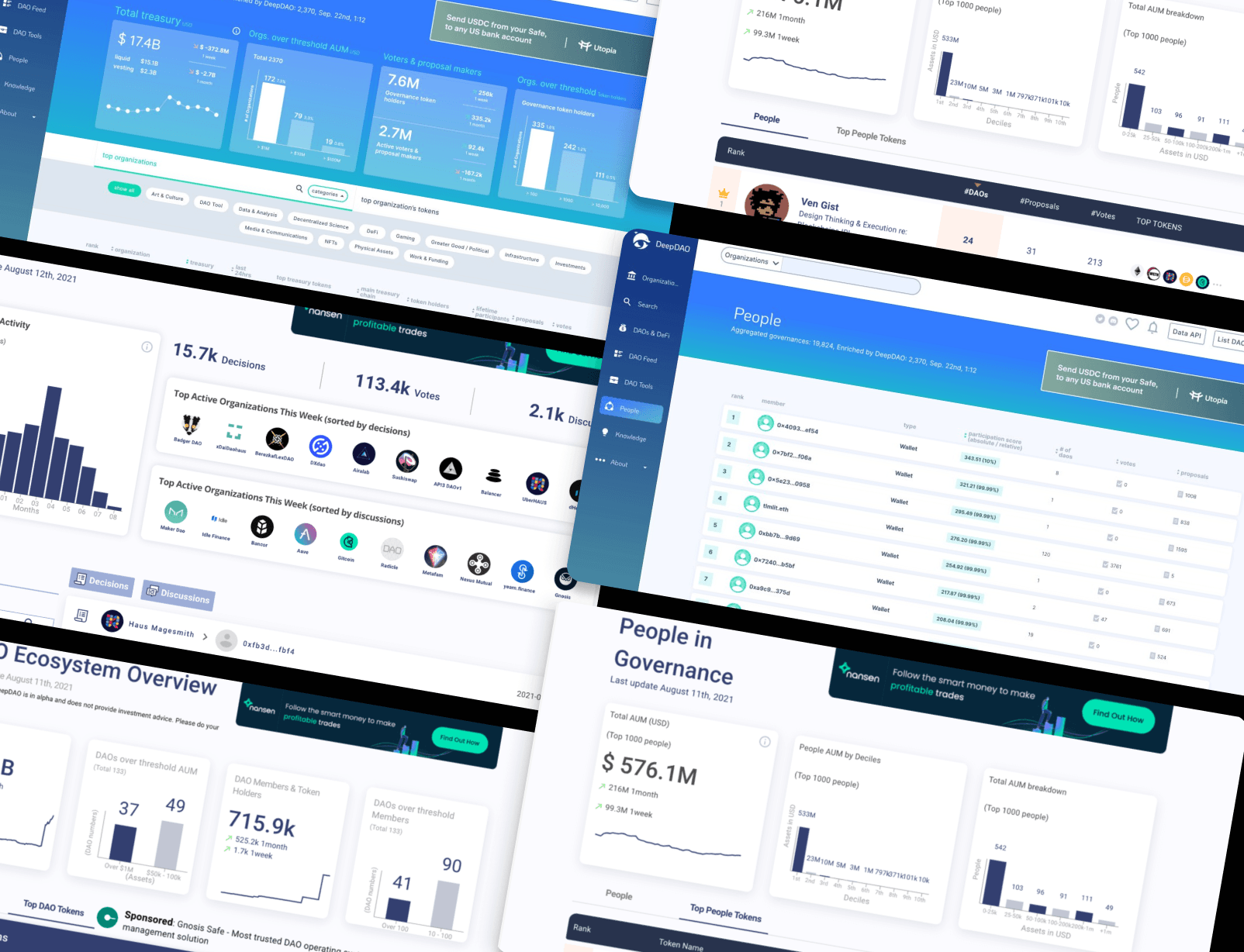
DeepDao is a data analytics platform that ranks and analyzes the top Decentralized Autonomous Organizations (DAOs) across multiple metrics.

Sumatra
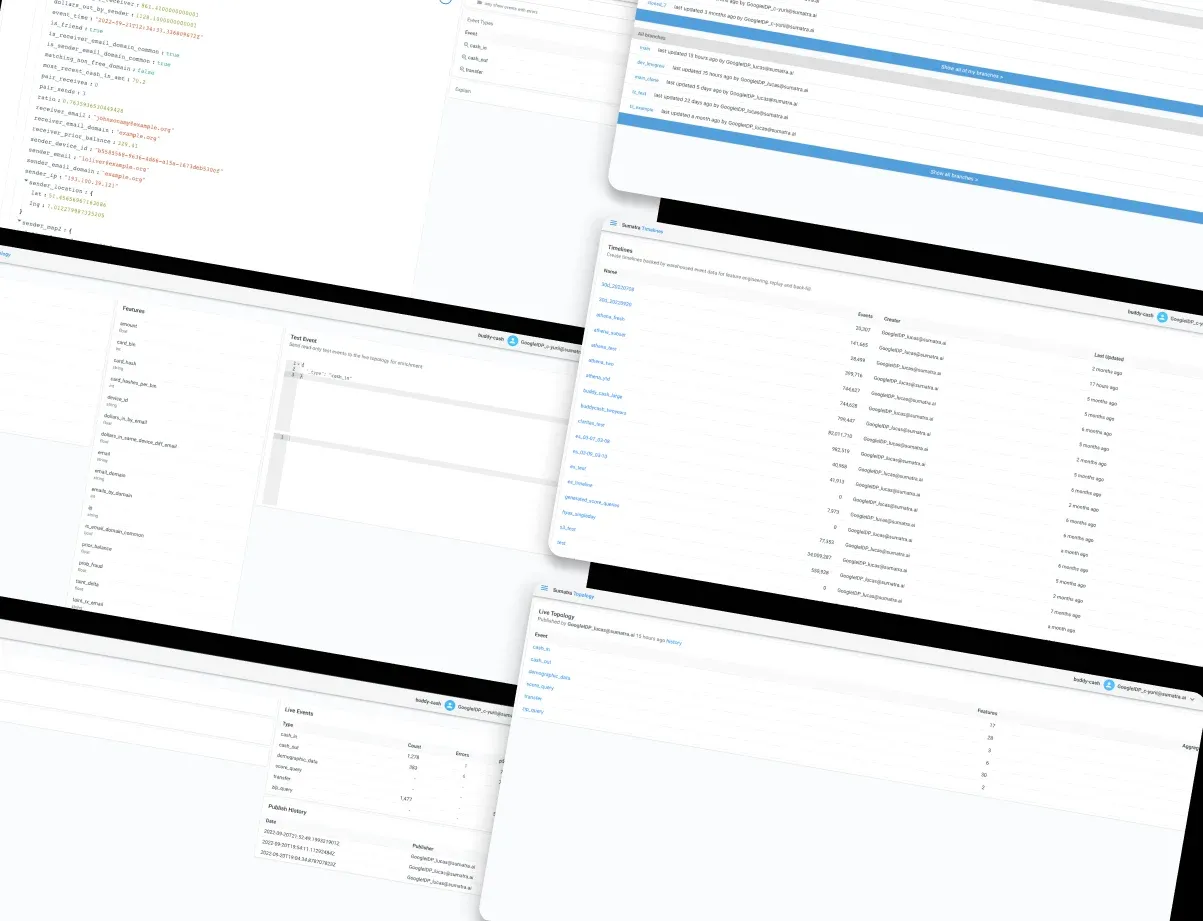
Sumatra is a platform that provides self-service capabilities for data teams, enabling them to build real-time feature pipelines from event-based data.
Technologies
Arizto
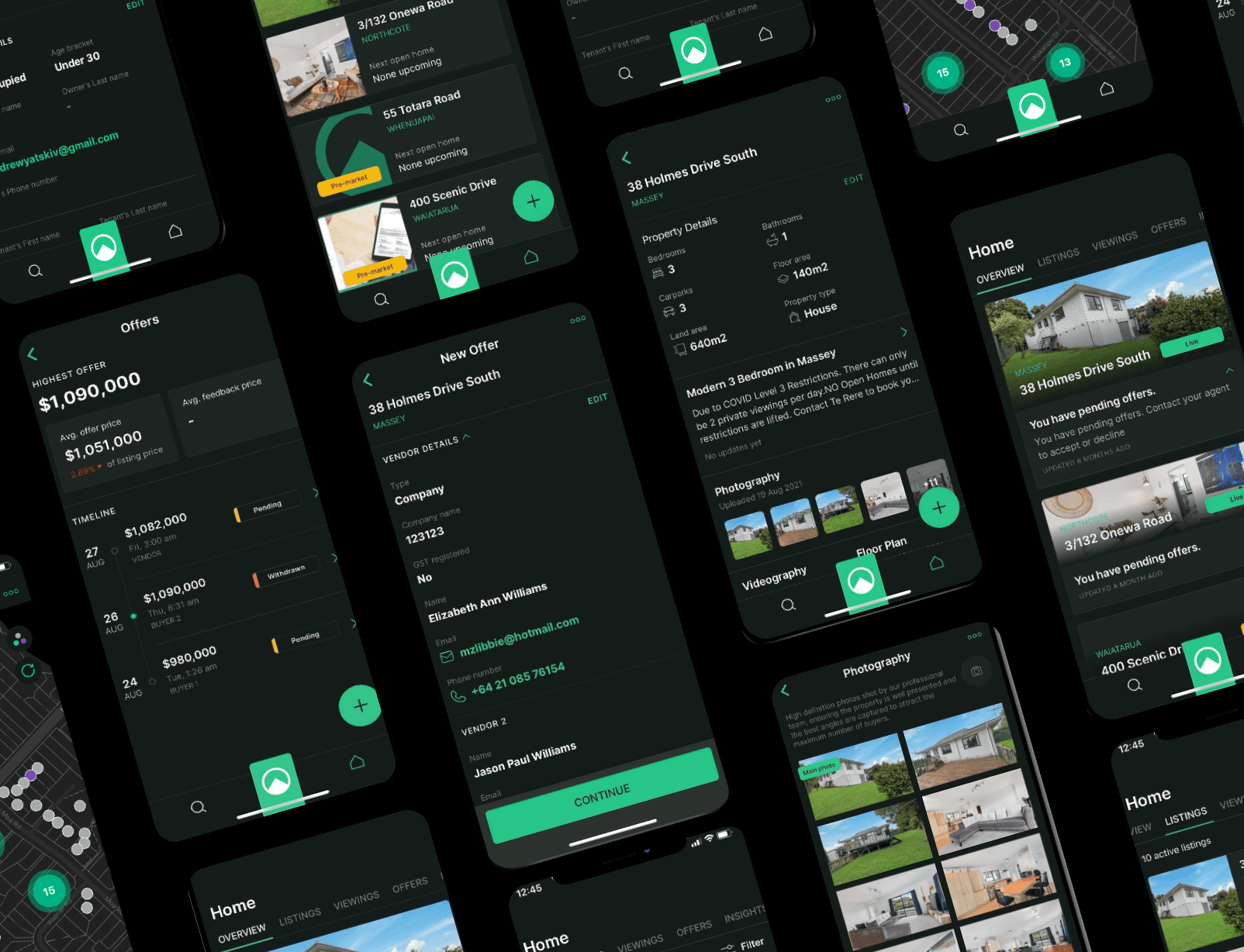
Arizto is an online real-time property sales monitoring dashboard that displays the transparent real estate relationship between sellers and buyers.
Bring Interactive 3D Experiences into Your Web Applications
Three.js enables rich, interactive 3D graphics directly in the browser, powering product visualizations, immersive interfaces, and real-time experiences. These related services help extend Three.js development into complete, high-performance digital products.


Frontend & Interactive Web Development
Build responsive interfaces with advanced visual capabilities.
3D Applications & Product Development
Turn 3D concepts into full-featured applications.
Backend & Real-Time Systems
Support interactive experiences with scalable backend logic.Process of Vetting and Hiring Three.js Developers
When clients hire a three JS developer through Incora, they follow a structured five-step process from requirements intake to post-placement monitoring.Defining 3D Project Requirements
We map the visual scope, performance targets, and integration points before any sourcing starts. This step produces a requirements profile that covers rendering complexity, device targets, and the specific output — whether WebGL, WebGPU, or WebXR.
Selecting Three.js Developers with Relevant Experience
We filter from our pre-vetted pool by rendering depth — not just framework familiarity, but shipped 3D products with documented optimization history. Only candidates whose background matches your scene type and performance profile reach your shortlist.
Technical Evaluation of 3D and Rendering Skills
Each developer completes a live evaluation covering shader logic, geometry optimization, draw call management, and async scene loading. We test for performance under real production constraints, not theoretical knowledge.
Client Interview and Technical Alignment
You interview the final shortlist with a full evaluation context from Incora. Most clients complete their selection within 3 to 5 business days of receiving profiles.
Onboarding and 3D Environment Setup
The developer joins your repo, gets access to your asset pipeline, and begins contributing within days of contract signing. Incora monitors delivery health post-placement and handles replacements if targets are not met.
Why trust us? More than 50+ customers worldwide did!
Only 3,5% of Three.js candidates pass Incora's evaluation — covering shader design, geometry optimization, and live rendering under production constraints. Client retention exceeds 90%. When companies hire three.js developers through Incora, they get engineers with verified scene delivery history matched to their stack and domain.
100+
Experts to choose from10+
Years of experience70+
Projects successfully delivered20+
Niche-experienced developersFAQ About Hiring Three.js Developers
What does a Three.js developer do?
A Three.js developer builds browser-based 3D applications using WebGL — handling geometry, lighting, materials, animation, and render loop management. They work across the full scene lifecycle: from initial architecture and asset pipeline setup to performance optimization and cross-device compatibility. Their output spans product configurators, data visualizations, WebXR experiences, and interactive marketing pages that run entirely in the browser without plugins.
What skills should professional Three.js developers have?
Strong Three.js developers understand WebGL fundamentals, GLSL shader programming, geometry instancing, and scene graph architecture. At the senior level, performance profiling, draw call reduction, and React Three Fiber integration are baseline expectations. When you need to hire dedicated three.js developers, Incora filters specifically for this depth — not just framework familiarity.
How much does it cost to hire Three.js developers?
Rates depend on seniority, engagement model, and scene complexity. When companies hire threejs developers through Incora, staff augmentation starts at $5k/month for a single engineer working inside your team. Managed teams with a technical lead begin at $10k/month, and full project delivery starts at $20k. Submit your requirements for a project-specific estimate based on your stack and output type.
How long does it take to hire Three.js developers?
Most clients receive a pre-screened shortlist within 48 hours of submitting requirements. With three.js developers for hire at all seniority levels and across domains, the final selection typically closes within 3 to 5 business days.
What types of applications can Three.js developers build?
Product configurators, virtual showrooms, WebXR experiences, 3D data dashboards, browser-based training simulations, and interactive marketing pages. To hire a three JS developer, Incora matches based on use case, scene complexity, and domain fit.
What technologies do Three.js developers typically use?
Beyond Three.js, the standard stack includes React Three Fiber, GSAP for animation, Draco for geometry compression, glTF for asset delivery, and Vite or Webpack for bundling. Physics integrations typically use Cannon.js or Rapier.
Check Out These Related Reads!
On our blog, we share tips, tricks, hacks, and insights on the business and tech industry to get you integrated into the software development environment. Head over to our blog to find the insights for your business.


Construction
AI Shift Scheduling for Construction: Is This the Future of HR and Payroll?


Construction
How We Build AI Tools to Simplify Construction Contract Review and Risk Detection

Construction
AI Construction Drawing Review: How Smart Tools Detect Errors Before You Build

Construction
Are 3D Takeoff Softwares Worth It? Accuracy, Cost, and Adoption Challenges
Get in touch
Let's discover which technologies will make your idea great.


This site uses cookies to improve your user experience. Read our Privacy Policy
Accept