



By Tetiana Stoyko
- CTO & Co-Founder
AI Construction Drawing Review: How Smart Tools Detect Errors Before You Build
AI construction drawing review detects design errors before building. Learn how AI reads construction drawings, reduces change orders, and saves time and costs.
Construction projects fail due to mistakes that should never occur. A misaligned pipe. A missing dimension.
A specification that conflicts with the drawing. These errors cost time, money, and reputation. Traditional manual review processes miss them.
But AI construction drawing review tools now catch these issues before the first nail is driven.
This comprehensive guide explores how AI construction-drawing technology helps prevent costly mistakes.
You'll learn what AI reads in construction drawing applications.
You'll discover why architects, engineers, and contractors are adopting these intelligent systems.
You'll understand how to integrate AI blueprint review into your workflow.
Key Takeaways
- AI construction drawing review catches 97-99% of errors, compared with 60-80% for manual review.
- AI construction drawings save 50-95% of time on takeoffs and drawing analysis.
- AI blueprint review reduces change orders by preventing design errors from reaching the construction phase.
- Automated drawing checking detects geometric, syntactic, and semantic errors automatically.
- AI building plan analysis integrates with BIM and project management systems.
- Construction drawing error-detection tools perform best on complete, high-quality source files.
- AI blueprint reader platforms range from specialized 3D takeoff for construction tools to comprehensive compliance checkers.
- Implementation requires selecting the right tool, training teams, establishing verification protocols, and measuring ROI.
- The competitive advantage lies with early adopters of AI for construction planning.
Why Construction Drawings Need Smarter Review?
Construction drawings are complex technical documents. They contain dozens of symbols, hundreds of dimensions, and intricate details.
Architectural, structural, mechanical, electrical, and plumbing drawings must coordinate perfectly. When they don't, disaster follows.
Common Drawing Errors That Cost Time and Money
Manual review of drawings relies on human attention. Human reviewers get tired:
- They miss details.
- They misinterpret symbols.
- They miss conflicts between disciplines.
The most frequent errors include:
Missing or incorrect dimensions are standard in complex projects. A missing wall height on one sheet may conflict with the mechanical engineer's ductwork placement on another.
Coordinate misalignment happens when architectural and structural drawings disagree on column locations.
Specification conflicts occur when written specifications contradict the drawing. A paint finish may differ between the drawing and the specification.
Incomplete drawing sets leave critical details to guesswork. Interdisciplinary clashes create impossibilities. Ducts run through steel beams.
Electrical conduit conflicts with plumbing. These real-world conflicts emerge during construction, triggering expensive change orders.
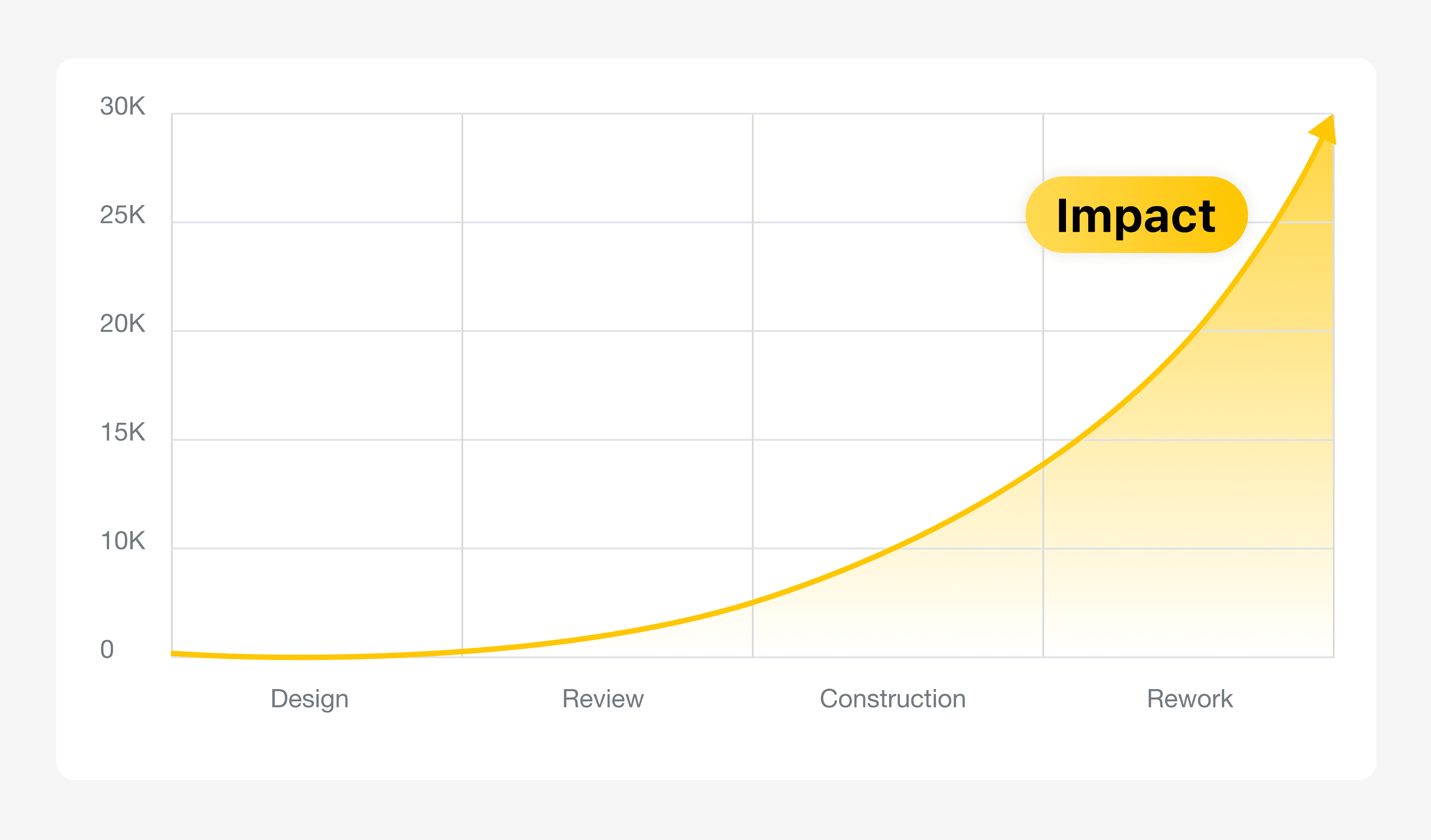
The cost of catching errors late is severe. A single change order during construction costs 10–20% more than if the work were included in the original bid.
Projects can run 20% longer and 80% over budget due to poor information flow and undetected errors. AI-powered document processing in construction can help fix it.
How AI Reads Construction Drawings: The Technology Behind Smart Review
Can AI Read Construction Drawings?
The question Can AI read construction drawings? has a clear answer today.
Advanced machine learning models now interpret technical drawings with over 99% accuracy.
They recognize symbols, extract dimensions, and identify inconsistencies faster than any human team.
AI building plan analysis starts with computer vision.
Specialized neural networks trained on thousands of construction drawings learn to recognize architectural symbols, electrical fixtures, plumbing components, and structural elements.
The system processes the image layer by layer. It identifies walls, doors, windows, dimensions, and annotations. It understands scale and proportion. It interprets conflicting information.
The technology combines several AI approaches:
- Machine learning models recognize patterns. They've learned from massive datasets what correct drawings look like. When something deviates, the system flags it.
- Computer vision frameworks process both vector-based CAD files and raster-based scanned blueprints.
- Natural language processing reads specifications, notes, and annotations.
- Deep learning architectures handle complexity that rule-based systems cannot.
This multi-layered approach enables AI construction drawing tools to read PDFs, DWG files, DXF files, and even scanned paper blueprints.
The system doesn't just extract data. It understands context. It knows which errors matter and which are cosmetic.
The Three Core Functions of AI Blueprint Analysis
Automated annotation and detection is the first function.
When you upload a construction drawing, the AI immediately identifies every element. It labels wall locations, marks door swings, records dimensions, and highlights annotations.
What would take an estimator hours now happens in minutes. The system segments and categorizes every component, creating a structured database of drawing contents.
Intelligent visual interpretation is the second function.
Unlike simple text recognition, AI blueprint review interprets the meaning of each symbol in context.
A circle on a plumbing drawing might indicate a pipe. The same circle on an electrical drawing might indicate a junction box.
The AI distinguishes based on context. It interprets dimensions, reads notes, and understands drawing conventions.
Verification and clash detection are the third function.
This is where AI construction drawing review prevents disasters. Such construction IT solutions checks:
- Do all dimensions agree across related drawings?
- Do architectural dimensions match construction layouts?
- Does the mechanical equipment fit within the available space?
- Do plumbing runs conflict with structural members?
- Are all the called-out details actually shown?
- Do material specifications appear in both drawings and specs?
When mismatches appear, the AI flags them immediately. Architects can fix issues before construction starts.
What Types of Errors Does AI Detect?
 Click to expand
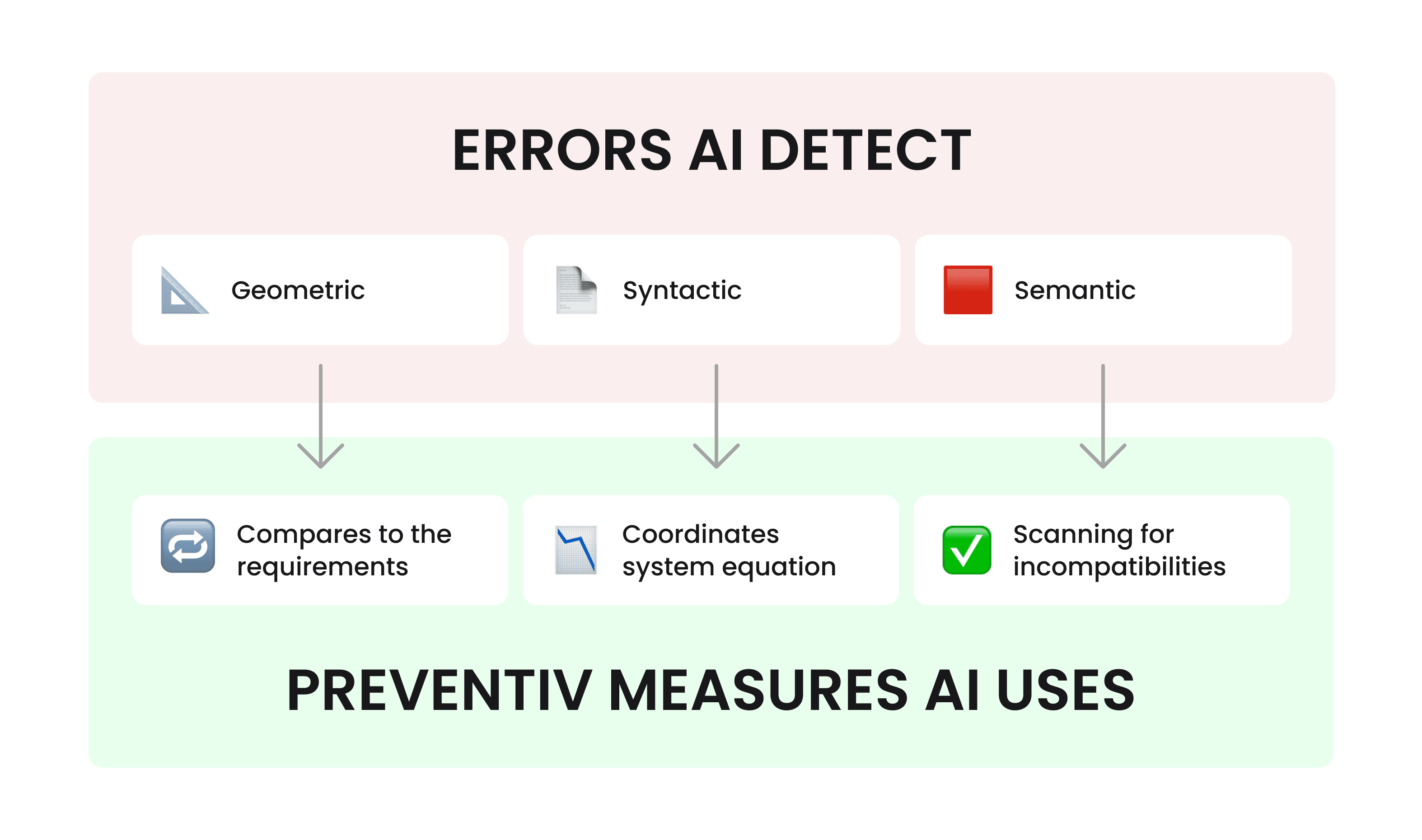
Construction drawing error detection systems identify multiple error categories:
Geometric errors include dimension inconsistencies, overlapping elements, misaligned components, and incorrect scaling. These directly affect buildability. A door frame dimension that contradicts the wall dimension creates a build-impossible condition.
Syntactic errors involve violations of drafting standards. Missing line types for hidden edges. Improper dimensioning. Non-standard symbology. While less immediately destructive than geometric errors, these create confusion and misinterpretation.
Semantic errors are the most dangerous. A drawing is technically correct but violates design intent. A structural tolerance that's too loose.
A material specification unsuitable for the environment. An incorrectly specified fire rating. These errors pass visual inspection but cause failures after construction begins.
How AI Building Plan Analysis Prevents Specific Problems
Missing dimensions are caught by comparing the drawing set against a checklist of required dimensions.
AI knows a wall must show height, length, and thickness. Missing any element triggers a flag.
Coordinate conflicts are detected by comparing coordinate systems across disciplines.
Structural columns marked at specific coordinates must align with the locations where architectural walls intersect them.
Material specification conflicts are found by scanning specifications for incompatibilities.
A waterproofing membrane specified for roofs shouldn't appear in wall systems. A paint finish inappropriate for humidity-prone areas gets flagged.
Incomplete symbol definitions are identified when symbols appear without legend entries. Automated drawing checking ensures every symbol used is defined.
Outdated or incorrect details are flagged when standard details don't align with the specific project conditions.
Coastal projects need salt-resistant materials. Mountain projects need snow load calculations.
AI verifies details match site conditions.
How Much Money Does AI Construction Drawing Review Save?
The financial case for AI construction drawings adoption is compelling.
Time savings are dramatic.
What took a full day of manual takeoffs now completes in under an hour.
Estimators spend 30+ hours weekly on manual work. AI blueprint reader tools eliminate this.
One construction technology company reported dropping RFQ processing time from multiple days to just 15 minutes. That's a 95% reduction in manual effort!
Accuracy improvements drive cost savings.
AI achieves 97–99% extraction accuracy on construction drawings. Human reviewers achieve 60–80% accuracy.
That 20–40 percentage-point gap translates directly into rework, material waste, and change orders. A single missed dimension causes scope creep. Multiple errors across a project can easily drive costs up 5–10%.
Fewer change orders mean lower project costs.
Design errors that reach the construction site trigger expensive change orders.
Catching errors during construction plan review costs nearly nothing. Fixing them during construction costs thousands.
Correcting design errors during construction accounts for 3% of the project value. Prevention through AI construction drawing review eliminates most of this cost.
Improved bid accuracy increases win rates.
Estimators using AI blueprint reader tools submit more accurate bids.
Fewer cost surprises mean fewer lost margins. More accurate bids mean better project profitability.
Teams report completing more bids faster and winning more competitive contracts.
Labor reallocation increases profitability.
Skilled professionals stop counting and start analyzing. Time freed from repetitive takeoffs goes to design optimization, value engineering, and client relationships.
That's higher-value work that improves margins.
Implementation: How to Adopt AI for Your Construction Projects
 Click to expand
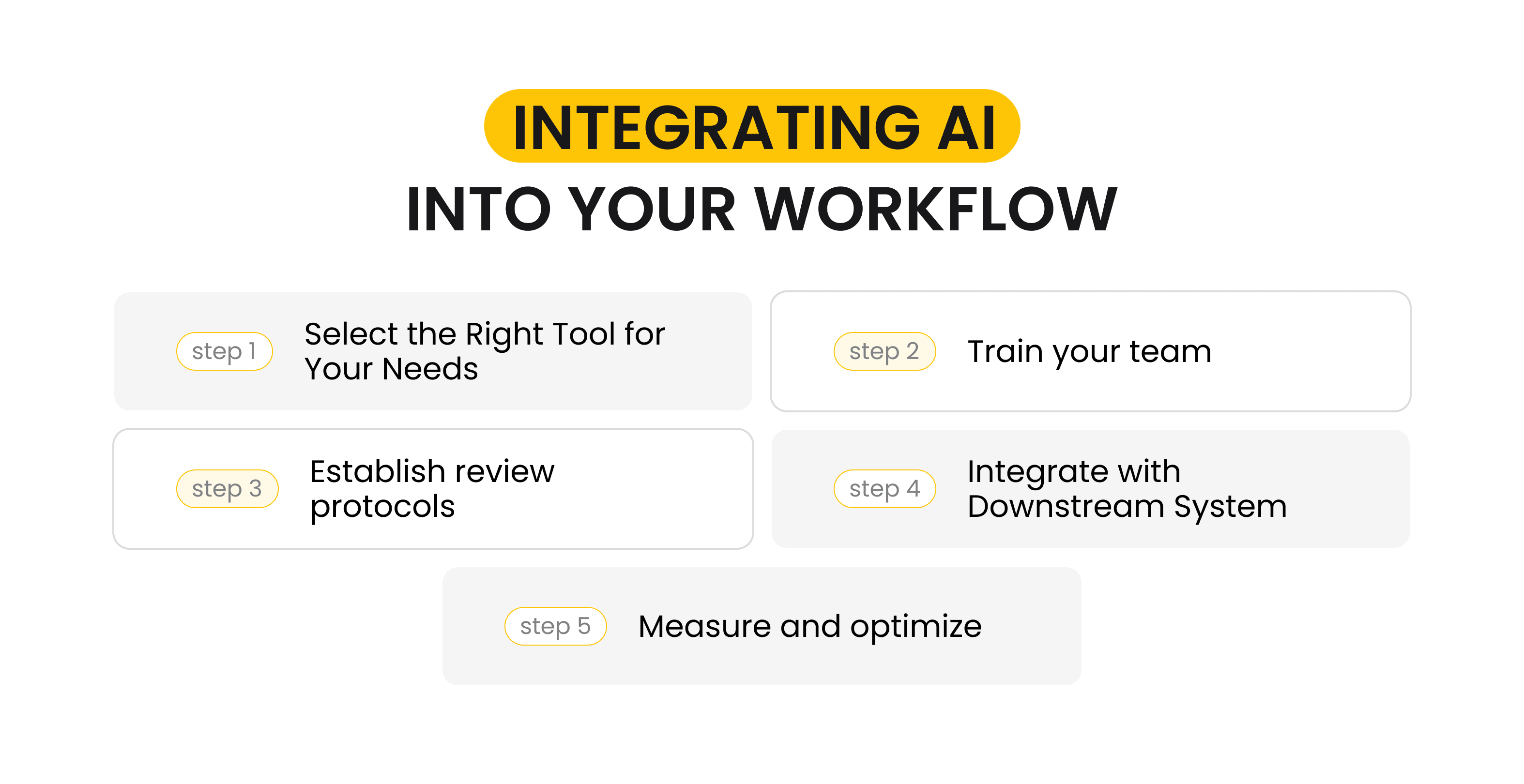
Integrating AI Into Your Workflow
Step 1: Select the Right Tool for Your Needs
Different projects have different needs.
A firm that primarily handles residential takeoffs requires different capabilities than one managing complex commercial projects.
Consider:
- What drawing formats do you receive? (PDFs, CAD, scanned)
- What's your primary use case? (Takeoffs, compliance, clash detection)
- How many drawings do you process monthly?
- What's your budget for automation?
- How important is integration with your existing systems?
Step 2: Train Your Team
AI tools work best when teams understand their capabilities and limitations.
Train estimators and planners on the new system. Show them how automated drawing checking works.
Demonstrate the verification process. Explain confidence scores and flagged items.
Step 3: Establish Review Protocols
AI blueprint reader tools achieve high accuracy but not perfection.
Establish a verification step in which humans review AI-extracted data before it is used. For critical dimensions or compliance-related data, require manual verification.
This hybrid approach combines AI speed with human judgment.
Step 4: Integrate with Downstream Systems
AI extracts data, but that data must flow into your estimating, PM, and procurement systems. Bridging AI output with field operations is exactly what construction software development handles — from document parsing to real-time site-coordination platforms.
Ensure the AI tool integrates with your estimating software, project management platform, and procurement systems.
Data should flow seamlessly from AI construction drawing review into cost sheets, material lists, and schedules.
Step 5: Measure and Optimize
Track metrics before and after implementation.
Monitor time savings. Track accuracy improvements.
Measure change order reductions. Calculate ROI.
These metrics justify continued investment and help identify optimization opportunities.
Best Practices for Effective AI Drawing Analysis
Upload complete sets. AI construction drawings analysis works better with complete information.
If you're missing sheets, the AI can't detect conflicts between missing and included drawings.
Use high-quality source files. Scanned drawings work, but digital files produce better results.
CAD and BIM files contain structured information that AI can extract more reliably than visual recognition of scans.
Ask specific questions. When using conversational AI tools, ask targeted questions. "What's the depth of the south wall?" is more effective than "Tell me about walls."
Review flagged items carefully. When AI flags a potential error, investigate thoroughly. False positives occur. But factual errors caught by AI save enormous costs.
Maintain data quality. Export AI-extracted data into structured formats. Verify numbers before using them for estimates or procurement.
Does AI Really Understand Construction Context?
A frequent concern: "Can AI really understand complex construction requirements?" The answer is nuanced.
AI construction drawing tools understand technical content exceptionally well. They recognize conflicts between elements. They verify compliance with standards. They extract specifications accurately.
AI-powered drawing review in construction is a concrete example of a broader AI capability: extracting structured data from unstructured documents at scale. Our AI & ML automation services apply the same document intelligence patterns to insurance claims processing, financial document extraction, and medical record digitization — wherever high-volume, high-stakes document workflows can benefit from automation.
What they don't do is replace professional judgment. An AI system might flag that a wall thickness conflicts with a structural requirement.
But deciding how to resolve it requires engineering expertise. AI handles the detection. Engineers hold the decision.
What About Unusual or Proprietary Details?
Another concern: “What if our project uses non-standard details?“
Modern AI blueprint reader systems handle this well.
They're trained on diverse drawing styles. They adapt to non-standard conventions.
Some systems allow users to define custom symbols that the AI learns to recognize.
Privacy and Data Security
There are legitimate concerns about uploading construction drawings to cloud systems. Leading platforms address this through:
- End-to-end encryption
- Secure cloud infrastructure
- Data retention policies (automatic deletion after a specified period)
- Compliance with data protection regulations
- On-premises options for sensitive projects
Verify security practices before selecting a platform.
Advantages of AI Construction Drawing Review with Incora
 Click to expand
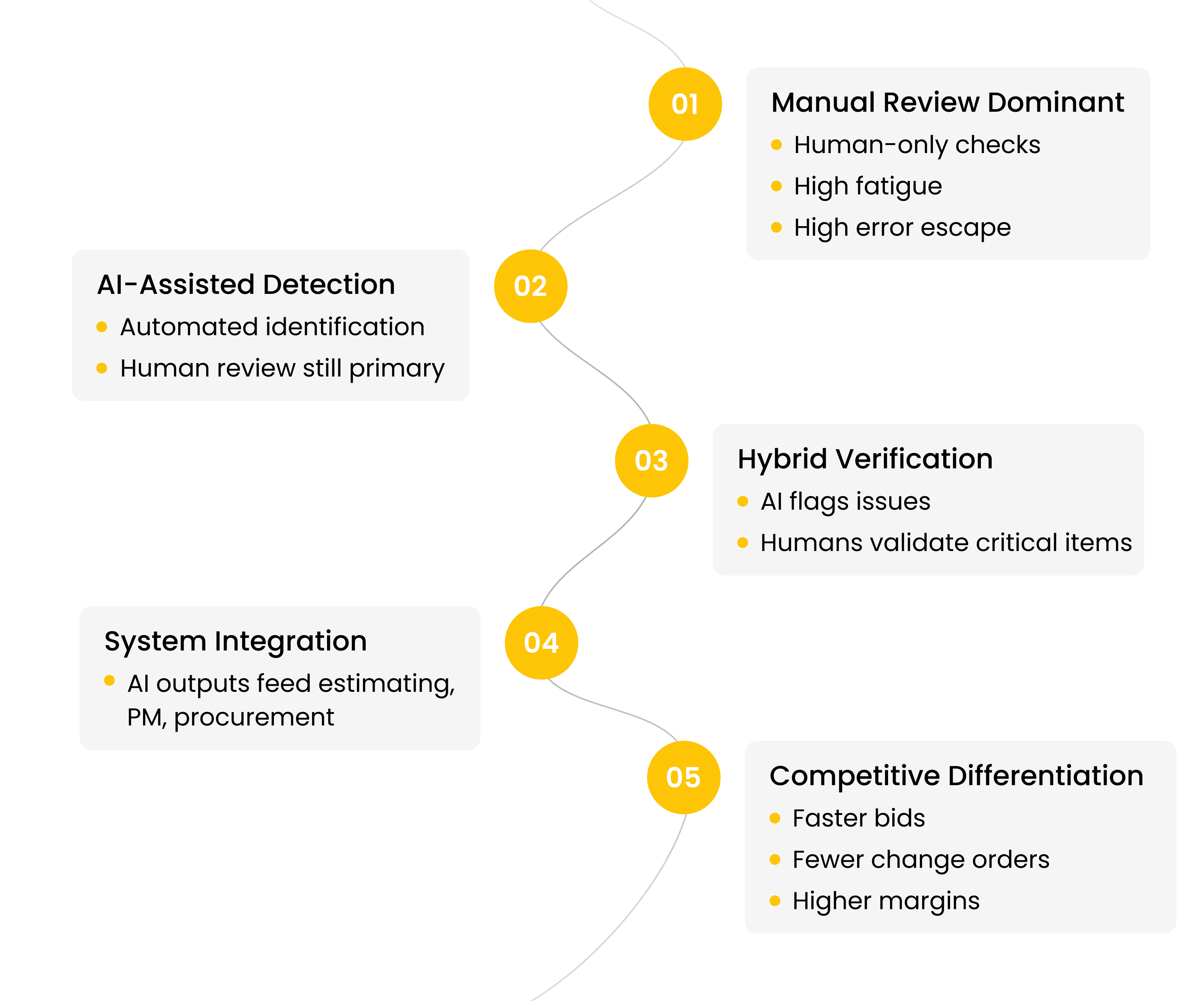
Manual review processes miss 20–40% of errors. AI construction drawing review tools catch 97–99% of errors.
The difference translates directly to reduced change orders, faster project delivery, and improved profitability.
AI construction drawing technology has matured beyond proof of concept. Leading platforms demonstrate measurable ROI.
Teams report dramatic time savings. Accuracy improves. Compliance risk decreases. Projects execute more smoothly.
The competitive advantage goes to firms that adopt this technology early. AI blueprint review is becoming table stakes in construction.
Firms that don't use automated drawing checking will struggle to compete on speed and accuracy against those that do.
The path forward is clear. Evaluate AI blueprint reader tools that fit your specific needs. Start with pilot projects to build confidence.
Scale adoption as your team gains experience. The investment pays for itself through reduced rework and change orders.
Construction drawing errors no longer need to be sent to the site.
AI building plan analysis catches them during the design phase.
AI for Construction plans review becomes faster, more accurate, and more thorough.
Your projects execute as planned. Your margins improve. Your reputation for reliability strengthens.
The future of construction is brighter. It's powered by AI. And it starts with more innovative detection of construction drawing errors during design.
FAQ
Can AI read construction drawings?
Yes. Modern AI construction drawing review tools use computer vision and machine learning to read PDFs, CAD files, and scanned drawings with up to 99% accuracy. They interpret symbols, dimensions, notes, and specifications across disciplines.
What is AI construction drawing review?
AI construction drawing review is the automated analysis of construction drawings using artificial intelligence to detect errors, clashes, missing dimensions, and specification conflicts before construction begins.
What types of errors can AI detect in construction drawings?
AI construction drawing error detection identifies geometric errors (misalignments, scaling issues), syntactic errors (drafting standard violations), and semantic errors (design intent or compliance issues).
How does AI blueprint review differ from manual review?
Manual construction plan review catches about 60–80% of errors and is limited by time and fatigue. AI blueprint review performs exhaustive checks across all drawings, consistently detecting 97–99% of issues.
Does AI building plan analysis replace engineers or architects?
No. AI for construction plans supports professionals by detecting issues faster and more accurately. Final decisions and design judgments remain with qualified engineers and architects.
How much time can automated drawing checking save?
Automated drawing checking can reduce takeoff and drawing analysis time by 50–95%, turning hours or days of manual work into minutes.


INSIGHTS


Get in Touch
Let’s talk!

