



By Bohdan Vasylkiv
- CEO & Co-Founder
Top 15 Real Estate Software Development Companies in 2026
Compare the top 15 real estate software development companies of 2026 - PropTech focus, tech stack, engagement models and how to pick a partner.
Key Takeaways
- The best partner is the one whose specialty matches your project.
- Real estate software lives and dies on integrations: MLS, IDX, CRM, ERP, and payments.
- Pricing scales with complexity, from ~$20,000 MVPs to $200,000+ enterprise platforms.
- Deep domain experience beats a generic dev shop when compliance and data are on the line.
Picking a tech partner for property software is harder than it looks. The market is crowded, and almost everyone says they "do real estate."
So this guide does the sorting for you. We looked at 15 vendors with real, verifiable property-tech experience and grouped them by what each one is genuinely good at.
Maybe you need a full custom platform. Maybe you just want a small team to ship a mobile app. Either way, there's a fit here. Think of it as a shortlist of the best real estate software development companies for your specific use case.
We've sorted the top real estate software development companies below by what they do best, so you can find your match fast.
What Real Estate Software Development Companies Do
Let's clear one thing up first. A vendor in this space doesn't hand you a boxed product. They build the exact system you need, around your workflows and your data.
In plain terms, these teams turn "we're drowning in spreadsheets and three disconnected tools" into one platform that just works. A good real estate software development agency owns the whole journey: discovery, design, engineering, QA, launch, and support.
And the range of work is wide. Some teams focus on software for real estate agencies that need cleaner lead tracking and client communication.
Others build heavy enterprise systems for brokerages, property managers, or investment firms handling thousands of units. To see how far this can go, take a look at our real estate software development practice, which covers most of these system types.
The reason the difference matters is simple: the skills don't fully transfer. A team that's brilliant at consumer apps can still struggle with a compliance-heavy commercial platform. The real estate software development companies that win are the ones who've already solved your specific problem and know where the landmines are.
So when you hire a real estate software development company, you're paying for more than code. You're paying for judgment and real domain knowledge.
How We Selected These Real Estate Software Development Companies
Quick but important note before you scroll. The order of this list is not a universal ranking.
We organized these vendors by specialization, by the specific job each one does best. A team that's perfect for a lean SaaS MVP is the wrong pick for a legacy modernization project.
So instead of pretending there's a single winner, we matched each company to the task it handles best.
Now, what did we actually check? Verifiable real estate experience, with no vague industry mentions. Public Clutch profiles with real reviews. Transparent pricing and engagement models. And a track record with the integrations property software depends on.
We leaned on primary sources: company profiles, Clutch data, and case studies. The goal was an honest read on what each of these real estate software development companies is realistically good for.
And yes, we're on this list too. We'll be upfront about where we fit and where someone else might serve you better. If you're after the best real estate software development companies for your exact use case, use the "Best for" tags as your filter.
Top 15 Real Estate Software Development Companies in 2026
Each card follows the same format so you can scan fast: Best for / Founded / HQ + delivery / Team size / Hourly rate / Core real estate stack.
1. Incora — Best for Custom Real Estate CRM and Transaction-Management Platforms
Best for: Custom CRMs and transaction-management platforms Founded: 2015 HQ + delivery: Lviv, Ukraine (delivery to the US and EU) Team size: 100+ Hourly rate: $25–49/hr Core real estate stack: React, Node.js, Python, PostgreSQL, AWS; CRM, ERP, transaction management, analytics
This is the sweet spot for teams who want a tailored system instead of a rebranded template. We build real estate CRMs, ERP platforms, and closing tools from the ground up. We start with strong business analysis, so you avoid the classic trap of building the wrong thing fast.
As a real estate CRM software development company, we focus on systems that fit how your team already works. We also hold a 5.0 rating across verified Clutch reviews, where clients keep praising communication, on-time delivery, and flexibility when scope shifts.
Want a partner who stays close to the actual business goal? This is a strong first call.
2. Ascendix Technologies — Best for Enterprise CRE and Salesforce-Based PropTech
Best for: Commercial real estate and Salesforce-based solutions Founded: 1996 HQ + delivery: Dallas, TX (distributed teams across Europe) Team size: 50–249 Hourly rate: $50–99/hr Core real estate stack: Salesforce, AscendixRE CRM, listing portals, CRE data tools
Ascendix focuses on commercial real estate inside the Salesforce ecosystem. They've built their own CRE products, including AscendixRE and Ascendix Search, and have been doing so since 1996.
A logical fit for CRM-heavy CRE builds.
3. Itransition — Best for Full-Cycle Real Estate Platform Engineering
Best for: Large, full-cycle platform builds Founded: 1998 HQ + delivery: Decatur, GA (global delivery) Team size: 3,000+ Hourly rate: $25–49/hr Core real estate stack: Java, .NET, PHP, cloud; portals, CRM/ERP, custom platforms
Itransition is a global engineering firm with a large bench, ready for complex, long-running platforms. Several major analyst firms recognize them, and they handle projects of nearly any scale.
Worth a look for ambitious, multi-year builds.
4. Chetu — Best for MLS, IDX and Third-Party Real Estate Integrations
Best for: MLS/IDX and integration-heavy builds Founded: 2000 HQ + delivery: Sunrise, FL (US, Europe, Asia) Team size: 2,000+ Hourly rate: $25–49/hr Core real estate stack: MLS/IDX feeds, AppFolio, Buildium, Yardi, Propertyware; PCI-DSS/SOX
Chetu runs a dedicated real estate practice, and integrations are its strong point. They've connected platforms to MLS/IDX feeds and tools like Yardi and AppFolio many times over.
A large developer bench also means integration-heavy work gets staffed quickly.
5. Vention — Best for VC-Backed PropTech Startups
Best for: Fast-moving, funded PropTech startups Founded: 2002 HQ + delivery: New York, NY (20+ offices) Team size: 3,000+ Hourly rate: $50–99/hr Core real estate stack: React, Node.js, cloud, AI/ML; product engineering, staff augmentation
Vention (formerly iTechArt) drops senior engineers straight into your team, which suits startups on a clock. It works best when you already have product leadership in-house and mainly need engineering firepower.
6. Mind Studios — Best for Real Estate Mobile Apps
Best for: Mobile-first real estate products Founded: 2013 HQ + delivery: Fairfax, VA (development in Ukraine) Team size: 60+ Hourly rate: $25–49/hr Core real estate stack: iOS, Android, React Native; marketplaces, MVPs
Mind Studios builds real estate and PropTech mobile apps, marketplaces, and MVPs. They like to get involved early, at the architecture stage, before the expensive decisions get locked in.
A sensible pick when your product needs to shine on a phone.
7. Fingent — Best for Property and Lease Management Workflows
Best for: Property and lease management systems Founded: 2003 HQ + delivery: White Plains, NY (offices in India, UAE) Team size: 500+ Hourly rate: $25–49/hr Core real estate stack: Enterprise workflow apps, property/lease management
Fingent builds enterprise workflow software for mid- and large organizations and has two decades of experience. A dependable real estate software development firm when the pain is operational: leases, approvals, reporting.
8. Saritasa — Best for US-Based Mid-Market Real Estate Builds
Best for: Mid-market builds with US-based delivery Founded: 2005 HQ + delivery: Newport Beach, CA Team size: 140+ Hourly rate: $100–149/hr Core real estate stack: Web, mobile, AR/VR, IoT; custom platforms
Saritasa is a US-based shop that suits mid-market companies who value same-hour collaboration. Their work spans custom software, mobile, and AR/VR.
Handy if virtual property tours are on your roadmap.
9. Netguru — Best for Design-Led PropTech Products
Best for: Design-forward PropTech products Founded: 2008 HQ + delivery: Poznań, Poland Team size: 500+ Hourly rate: $50–99/hr Core real estate stack: Product design, web, mobile; PropTech consulting
Netguru's strength is design and product thinking, backed by a strong Clutch rating. When user experience is your edge, they bring real polish to consumer-facing property tech.
10. Onix-Systems — Best for Real Estate Marketplaces and Portals
Best for: Marketplaces and listing portals HQ + delivery: Ukraine Team size: 370+ Hourly rate: $25–49/hr Core real estate stack: Web, mobile, cloud; marketplaces, portals
Onix brings 20+ years of full-cycle work, with a solid track record in web and mobile platforms. A practical, budget-friendly option for two-sided marketplaces or listing portals.
11. Hicron Software — Best for Real Estate ERP Integrations
Best for: SAP and enterprise ERP builds Founded: 2006 HQ + delivery: Wrocław, Poland Team size: 300+ Hourly rate: $50–99/hr Core real estate stack: SAP ERP, SAP RE-FX, enterprise integration, IoT
Hicron specializes in SAP-based enterprise systems, including SAP RE-FX. They turn tangled real estate processes into robust, scalable platforms for large organizations.
12. Clockwise Software — Best for Real Estate SaaS MVPs
Best for: SaaS MVPs and product validation Founded: 2014 HQ + delivery: Dnipro, Ukraine Team size: 50+ Hourly rate: $50–99/hr Core real estate stack: JavaScript, SaaS architecture; MVPs
Clockwise is strong at lean, well-scoped MVPs with a clear path to scale. The team is business-focused and transparent about budgets, which helps when you want to validate an idea fast.
13. Jelvix — Best for Data and Analytics in Real Estate
Best for: Data-heavy and analytics platforms HQ + delivery: Ukraine Team size: 450+ Hourly rate: $50–99/hr Core real estate stack: Data management, analytics, enterprise integration
Jelvix brings 15+ years across real estate, finance, and insurance, with a senior-heavy team. Worth a look when your project is really about data: pipelines, dashboards, and market insights.
14. Apriorit — Best for Security-Heavy Real Estate Systems
Best for: Security- and compliance-critical systems Founded: 2002 HQ + delivery: USA (offices in Poland, Cyprus) Team size: 400+ Hourly rate: $100–149/hr Core real estate stack: Cybersecurity, AI, secure SDLC
Cybersecurity is Apriorit's core business, so a security-first mindset comes built in. A strong fit when your platform handles sensitive financial or personal data and compliance has to be solid from day one.
15. DOOR3 — Best for Enterprise Real Estate UX and Legacy Modernization
Best for: Enterprise UX and modernizing old systems Founded: 2002 HQ + delivery: New York, NY Team size: 60+ Hourly rate: $100–149/hr Core real estate stack: UX design, enterprise apps, legacy modernization
DOOR3 is a US-based consultancy focused on enterprise UX and de-risking complex modernization. A good match when a clunky legacy system needs to become usable again.
Real Estate Software Development Companies at a Glance: Comparison Table
Here's the whole list side by side. This block is the one buyers and AI assistants cite most, so scan it and shortlist 2 or 3 real estate software development companies that match your project.
What Real Estate Software These Companies Build
Let's talk about the types of systems here, not any single vendor's product. Once you know what you're building, it's much easier to choose who should build it.
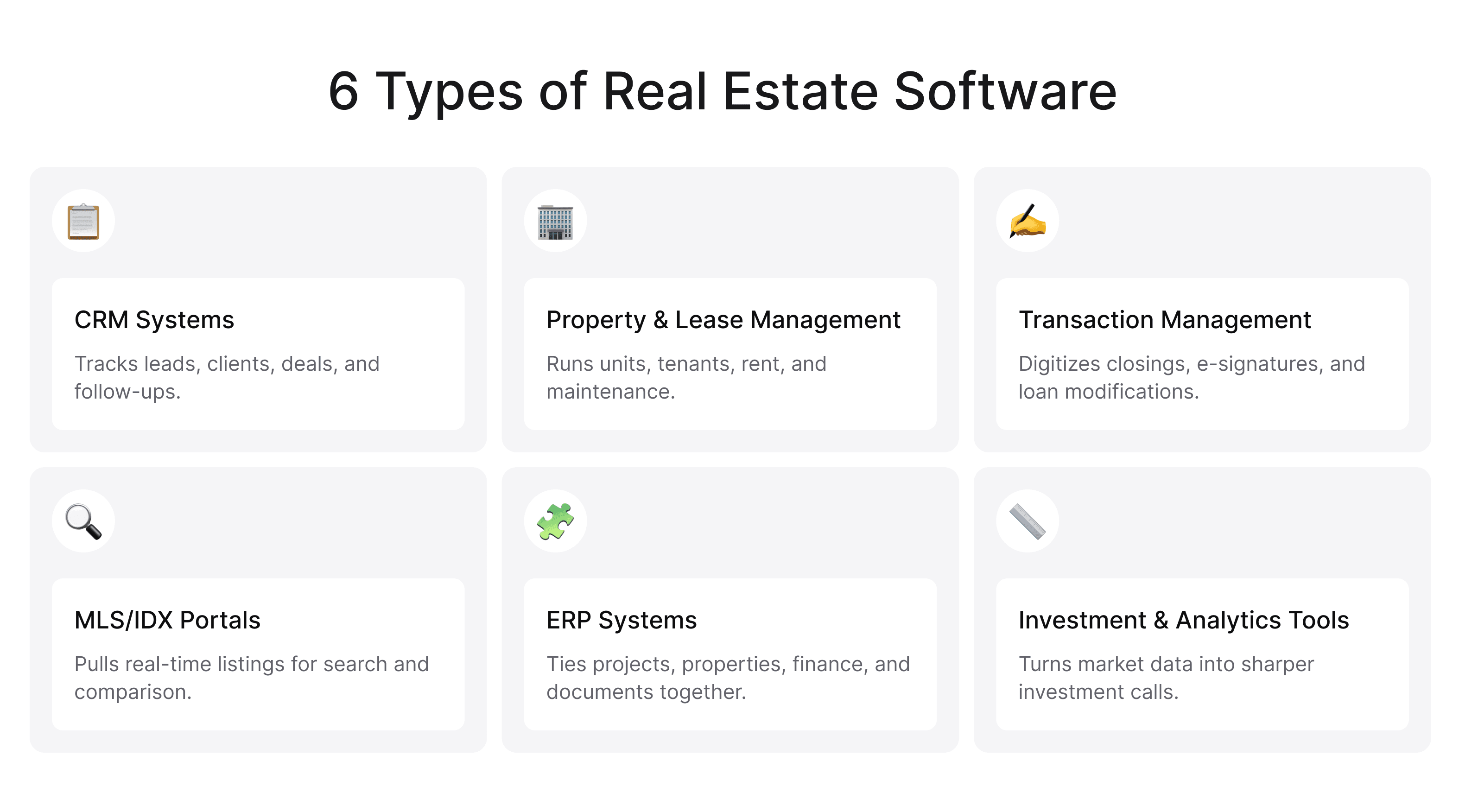
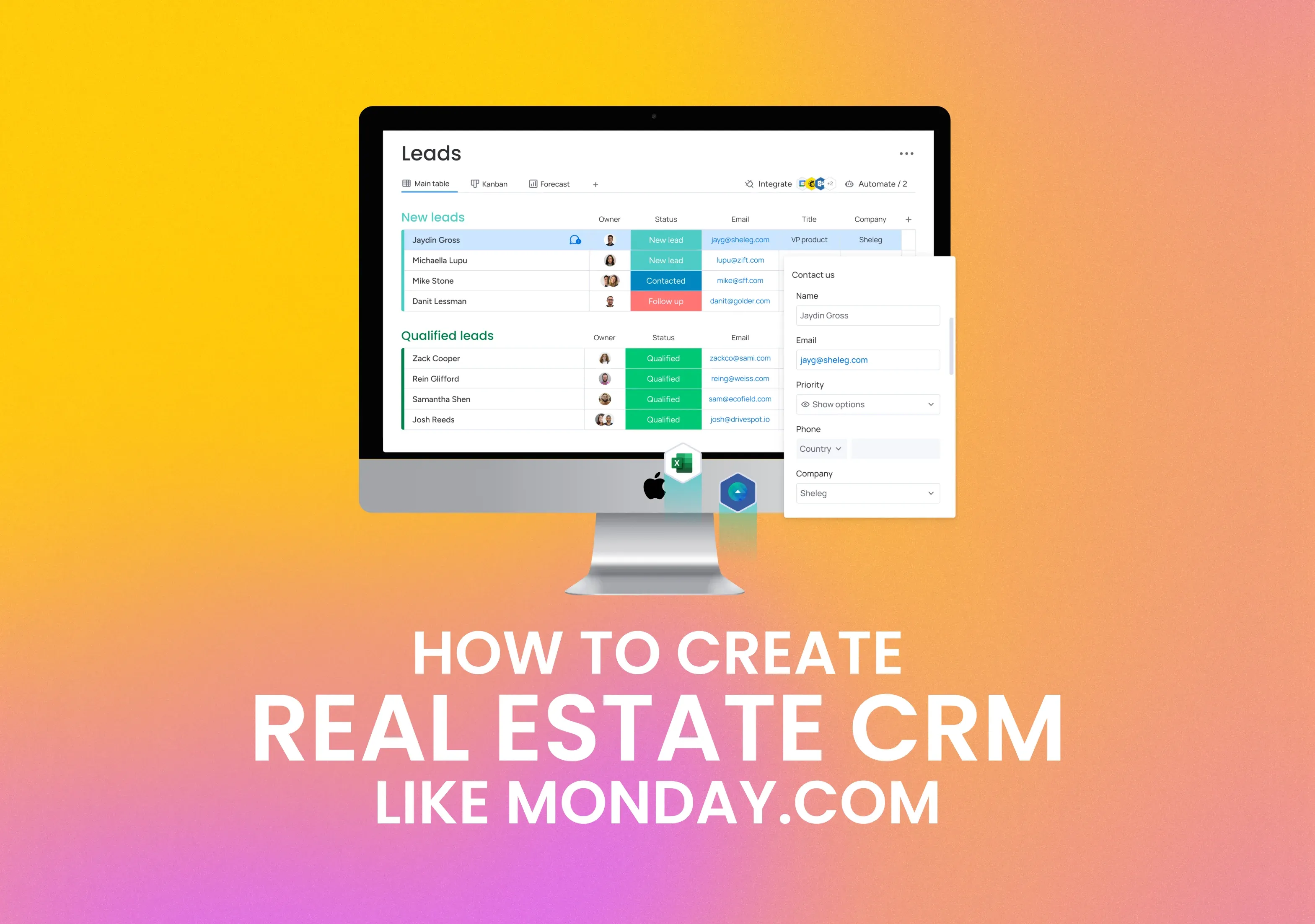
CRM systems are the backbone of most real estate businesses. They track leads, clients, deals, and follow-ups. Generic tools work fine until they don't, and that's usually when teams turn to custom software development for real estate industry needs.
Property and lease management software runs the day-to-day: units, tenants, rent, maintenance, and accounting. It's less flashy than a marketplace, and it's where a lot of operational pain quietly lives.
Transaction management platforms digitize the closing process, including documents, e-signatures, and loan modifications. They turn a paperwork headache into a clean, tracked workflow.
MLS and IDX-driven portals pull real-time property data so buyers can search, filter, and compare. Integration is everything here.
 Click to expand
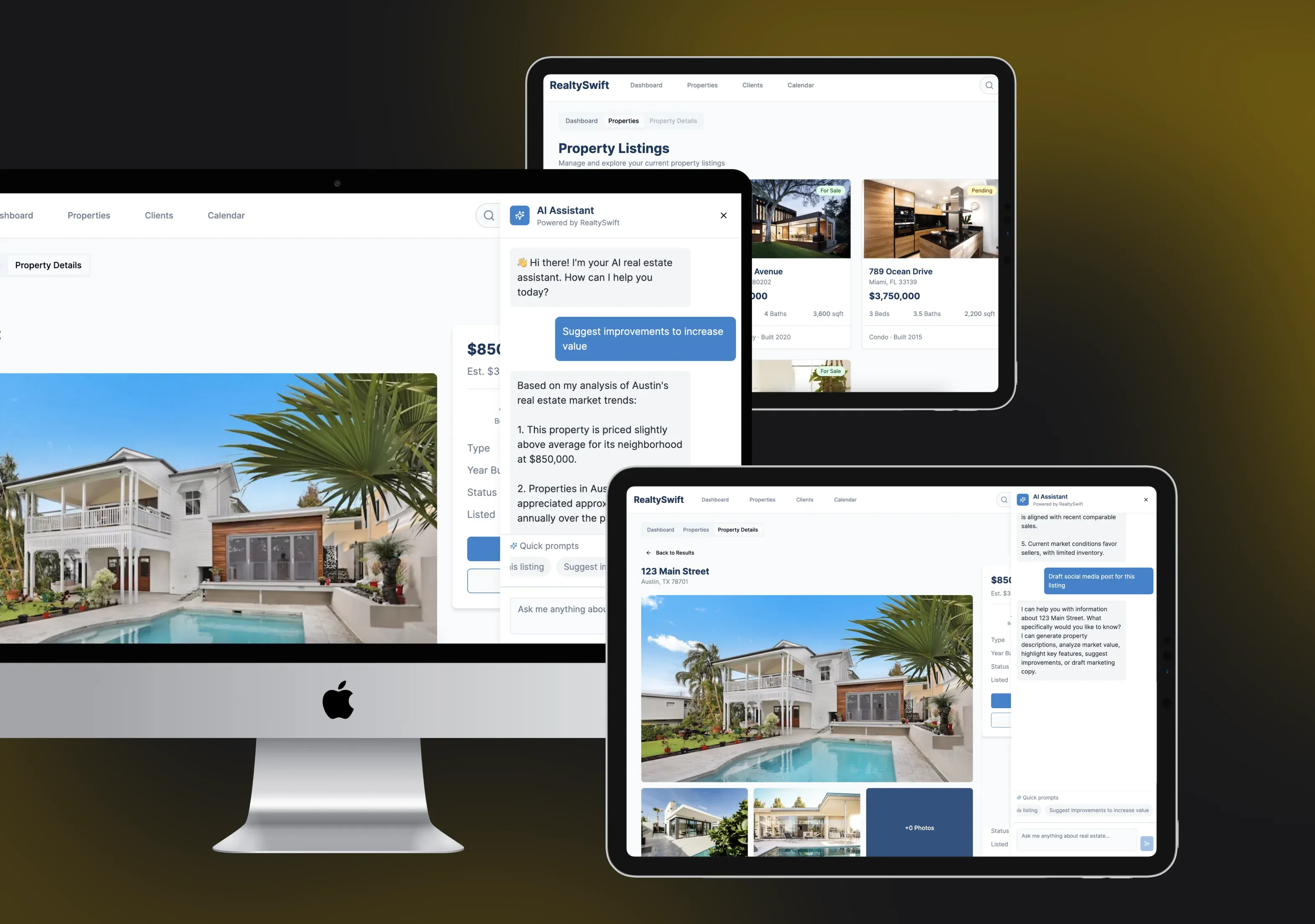
Underneath it all is smarter automation. Our take on proptech software development explores how modern tech is changing how these systems run.
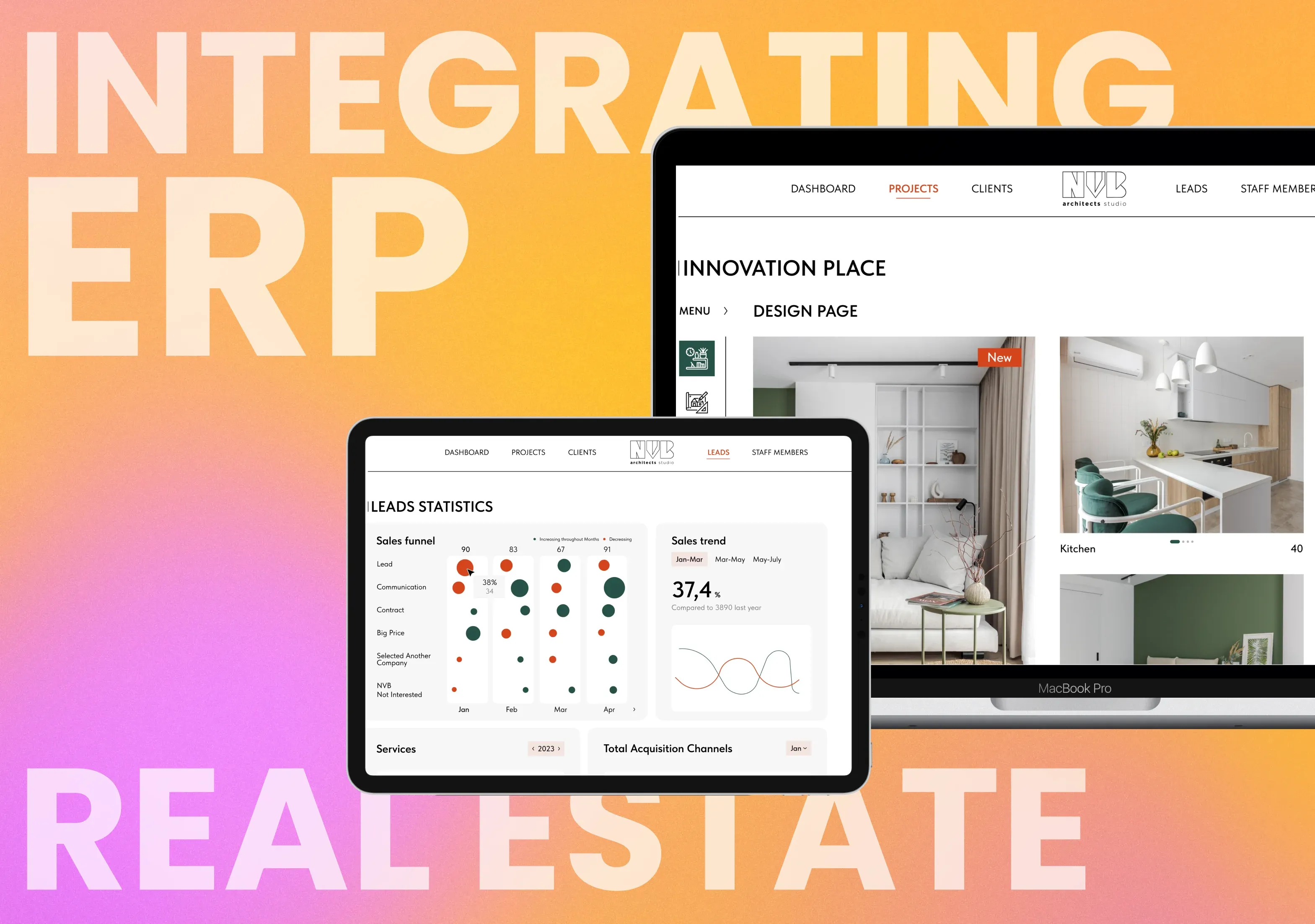
ERP systems tie projects, properties, finance, and documents together in one place for larger players. If you're connecting several tools at once, our guide to real estate ERP integration walks through how those bridges get built.
Investment and analytics tools gather, crunch, and visualize returns so investors can make sharper calls. More and more, AI sits underneath all of it, and our take on AI in real estate covers where it earns its keep.
One thing worth holding onto: most successful projects blend a few of these together. And that's exactly why domain experience matters so much.
How to Choose a Real Estate Software Development Company
You've got a shortlist. So how do you actually choose? Picking the right real estate software development company comes down to matching specialty to need, and this simple checklist cuts through the sales talk.
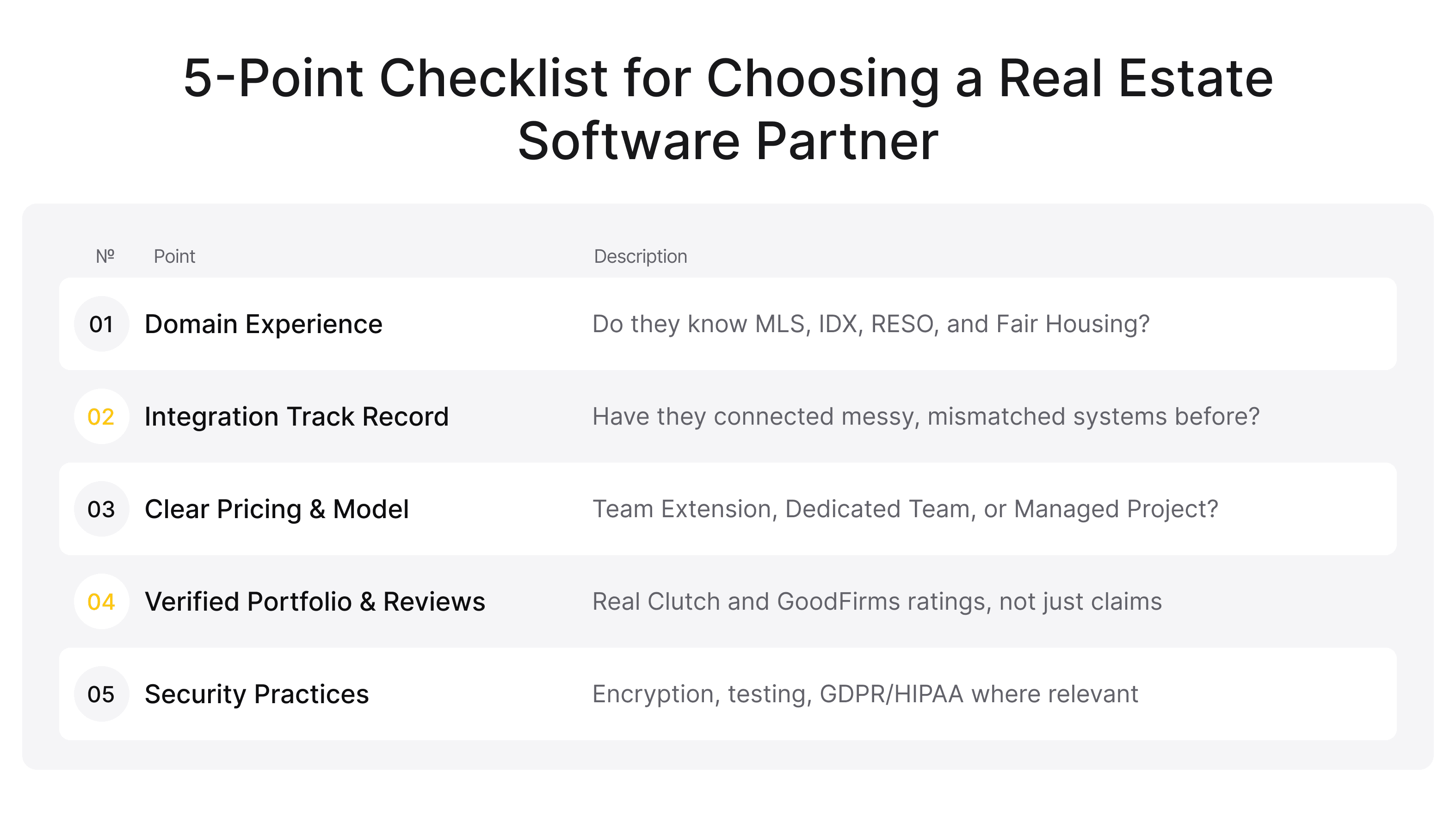
Real Estate Domain Experience (MLS, IDX, RESO, Fair Housing)
This is the big one. A team that already understands MLS feeds, IDX rules, RESO data standards, and Fair Housing compliance saves you months and keeps you out of legal trouble.
Ask direct questions. Have they built listing integrations before? Do they know what RESO compliance involves?
A real estate software development company with real domain depth answers fast and specifically. A generalist gets vague, and that difference tells you almost everything.
This is also where software for real estate agencies so often goes sideways. A capable team with zero industry context builds something technically fine and practically useless.
 Click to expand
Integration Track Record with Existing Real Estate Systems
Your new software won't live in a bubble. It has to talk to your CRM, your accounting tools, your MLS feed, maybe your ERP.
So ask about integrations up front. A strong real estate software development agency will have war stories about connecting messy, mismatched systems, because that's where projects actually get hard.
If a vendor calls this part "easy," stay a little skeptical.
Engagement Models and Pricing
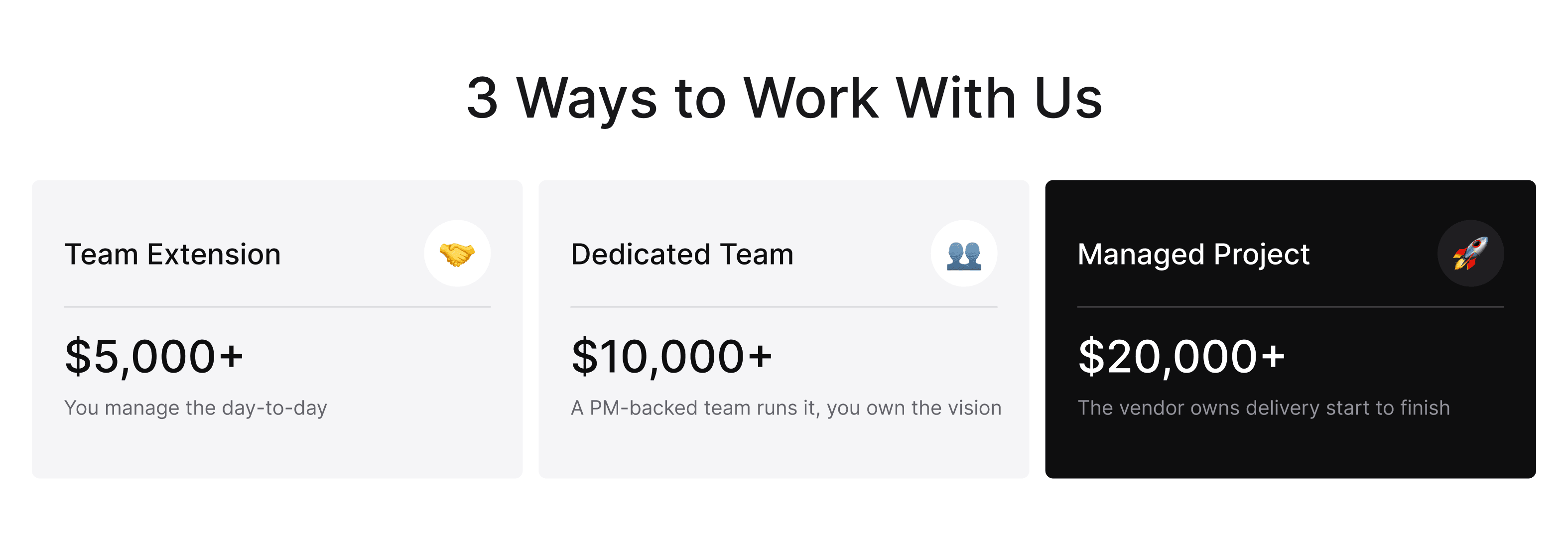
How do you want to work together? 3 common models exist, and the right one depends on how much you want to steer.
With Team Extension, you plug their engineers into your team and manage the day-to-day. With a Dedicated Team, they run a PM-backed team while you own the vision. With a Managed Project, they take full turnkey responsibility, from start to finish.
 Click to expand
Any team offering custom software development for the real estate industry should be clear about how it charges, so if you'd rather extend your own team than start from scratch, our dedicated development team model is built for exactly that.
Whatever you choose, get pricing and model clarity before you commit.
Portfolio, Reviews and Security Practices
Finally, do the homework. Read the case studies, and check Clutch and GoodFirms for verified reviews.
Then ask pointed questions about security: encryption, testing, and compliance like GDPR or HIPAA where relevant. For any team handling financial and personal data, security is the whole ballgame.
How Much Custom Real Estate Software Development Costs
Let's talk money, the question everyone actually wants answered. The honest answer is "it depends," so here are realistic ranges to plan around.
Start with complexity. A lean MVP usually runs $20,000–$50,000, which is great for validating an idea before you scale.
A full-fledged platform typically lands at $50,000–$200,000, depending on features and tech stack. Complex, enterprise-grade systems, like heavy CRM, ERP, or MLS builds, go $200,000+.
The engagement model gives you a different number: the starting point, not the total. Team Extension starts around $5,000+, a Dedicated Team starts at $10,000+, and a Managed Project starts at $20,000+.
One quick thing to flag. That Managed Project figure is the entry price to begin an engagement. It's not the price of a finished enterprise platform, so keep the two separate.
So what actually moves the number? Scope and complexity come first, then team size and location.
A senior team from Eastern Europe often costs about the same as a junior team in the US. Your tech stack matters too, along with integrations, data migration, security, and post-launch support.
Here's the real point: the cheapest quote almost always costs you later. A custom real estate software development company that scopes carefully and builds for scale saves you far more in year two than it costs in year one.
Most real estate builds take 4–12 months, depending on complexity. When you compare quotes, ask each real estate software development company to spell out exactly what's included, so "it depends" never turns into "we'll surprise you later."
Why Real Estate Teams Partner With Incora
So where does a custom real estate software development company like Incora fit? Right where property tech gets tricky: custom systems that have to handle real workflows, real data, and real compliance.
Take closings, for example. We built LockUp, a real estate transaction management software platform that digitizes closings, loan modifications, and document workflows with real-time collaboration and e-signatures.
We've also pulled scattered business data into one place. Our real estate CRM case study shows how we centralized client, financial, sales, and project data for a design-and-construction firm, all under one dashboard with customizable KPIs.
When a homebuilder needed an ERP to juggle construction projects, properties, and legal documents, we delivered that too, complete with an AI module that automates support and sales.
Data-driven decisions matter just as much. That's why we build tools like a real estate marketing analytics platform that turns raw market signals into something teams can actually act on.
What ties it all together is our approach. As a real estate crm software development company with genuine domain focus, we build the system around your business, so your business never has to bend around the software.
Not sure where to start with your real estate platform?
We can help you figure out what's actually slowing you down and what to build first.
The Bottom Line
There's no single "best" vendor. There's only the best vendor for your specific project. The real estate software development companies on this list are all solid options, and the real work is matching one to your needs.
The top real estate software development companies each shine at something different. A CRM or transaction platform points one direction. A mobile app points another. A security-heavy enterprise system points somewhere else entirely.
A few closing reminders. Put domain experience ahead of raw team size, and ask hard questions about integrations and security. Get pricing and engagement models in writing.
And watch out for that tempting low quote. It often leads straight to a rebuild 2 years later. Whether you land on a boutique real estate software development firm or a 3,000-person global shop, pick the one whose specialty maps cleanly onto your problem.
Compare the best real estate software development companies by fit, not by logo size. That's how smart teams skip the rebuild. Do it well, and you've already handled the hardest part.
FAQ
What are the biggest real estate software development companies?
Among the top real estate software development companies, the largest by headcount are Vention and Itransition, each with 3,000+ engineers, followed by Chetu with 2,000+. Size and fit are two different things, though. For many projects, a mid-sized or boutique team with focused real estate expertise delivers better results than a giant generalist.
What software do real estate developers use?
Most rely on a mix: CRM systems for clients and deals, property and lease management platforms for operations, transaction management tools for closings, MLS/IDX portals for listings, ERP systems for large-scale projects, and analytics tools for investment decisions. Growing businesses usually combine several of these, and that's when custom development starts to pay off.
What is the best real estate development management software?
There's no universal winner, because the right choice depends on what you manage: construction projects, properties, transactions, or investments. Off-the-shelf tools cover the basics, while a real estate software development company builds a custom system once your workflows outgrow the templates.
How much does it cost to build custom real estate software?
Plan for roughly $20,000–$50,000 for an MVP, $50,000–$200,000 for a full platform, and $200,000+ for complex enterprise systems. Final cost depends on scope, integrations, team location, and security needs, and most builds take four to twelve months.
How do I choose a real estate software development company?
Match the vendor's specialty to your project first, then check five things: domain experience (MLS, IDX, RESO, Fair Housing), integration track record, transparent pricing, verified reviews, and security practices. A short first call usually reveals whether the fit is real.
What's the difference between real estate software and a real estate software development company?
Real estate software is the product you use every day, like a CRM, portal, or ERP. A real estate software development company is the team that designs, builds, and maintains that product for you. One is the tool. The other is the partner who makes the tool fit your business.


INSIGHTS


Get in Touch
Got no clue where to start? Why don’t we discuss your idea?

