



By Bohdan Vasylkiv
- CEO & Co-Founder
How Saudi Arabia’s Real Estate Law Is Reshaping Technology and Software Development
Saudi Arabia’s 2026 real estate law is reshaping foreign property ownership, compliance, and PropTech growth. See what it means for investors and tech leaders.
Saudi Arabia’s updated real estate law is not just a regulatory revision. It is a structural redesign of how property ownership, compliance, and capital participation operate across the Kingdom. The reform introduces clearer ownership conditions, stronger enforcement mechanisms, and formalized eligibility criteria for foreign participation. These changes extend beyond legal interpretation. They reshape the digital systems required to support real estate transactions.
The Saudi Arabia real estate law 2026 establishes a more transparent framework for licensing, documentation, and zone classification. Investors now evaluate opportunities within defined regulatory boundaries. Developers must verify eligibility before transactions proceed. Financial institutions require standardized documentation before underwriting assets. Each of these requirements increases the need for an integrated software infrastructure.
For CTOs, PropTech founders, and institutional investors, the signal is clear. When regulation becomes more structured, technology must become more precise. Platforms for ownership management, compliance validation, mapping, portfolio oversight, and regulatory risk oversight now sit at the center of the ecosystem.
This article examines the changes the reform brings, why it accelerates PropTech demand, and how early adoption of digital systems creates a measurable advantage.
What the 2026 Saudi Real Estate Law Means?
The 2026 reform modernizes national property law and clarifies ownership rights under the updated Real Estate Ownership by Non-Saudis law. It establishes defined pathways for foreign property ownership Saudi Arabia, balancing openness with regulatory safeguards.
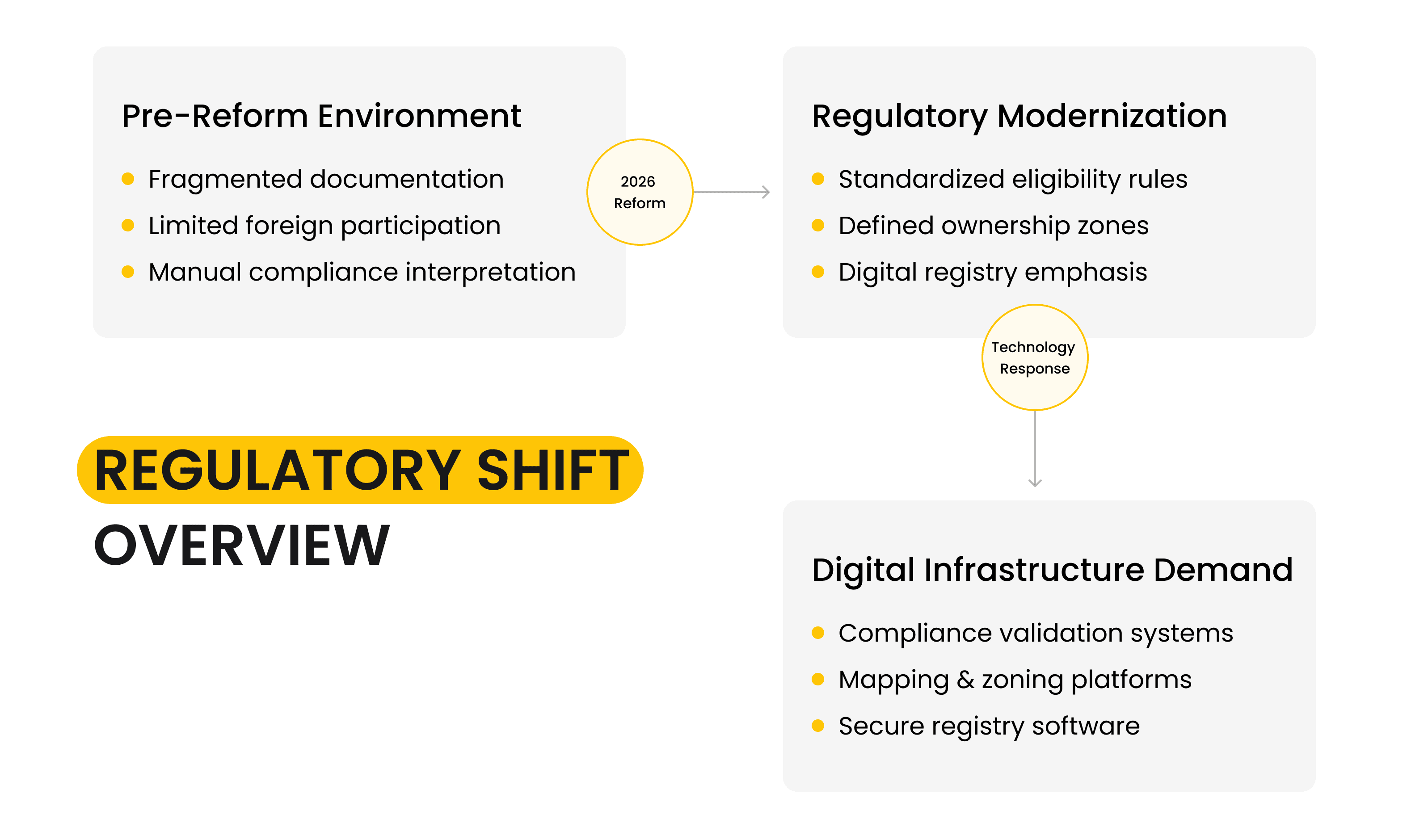
At a high level, the reform does three things. First, it formalizes participation conditions for non-Saudi investors. Second, it standardizes documentation and reporting requirements. Third, it strengthens oversight mechanisms tied to registry systems and licensing controls.
Rather than allowing unrestricted liberalization, the updated legislative framework introduces a structured approach to expansion. Foreign participation is permitted within designated zones and under regulated conditions. This controlled approach positions the Kingdom as complementary to other regional hubs rather than directly competing with them. As noted in a recent Forbes analysis of Saudi property reform, the strategy positions the Kingdom as complementary rather than competitive within the GCC region.
The implications for real estate investment in Saudi Arabia are significant. Predictable ownership structures reduce ambiguity. Clear eligibility frameworks reduce interpretive disputes. Stronger registry controls increase investor confidence. These factors collectively enhance long-term capital stability.
The reform also changes the enforcement logic. Instead of relying on manual interpretation, compliance becomes rule-based. This increases the demand for systems that embed regulatory logic directly into transaction workflows.
The reform, therefore, does not merely update statutes. It transforms operational expectations across the property ecosystem.
 Click to expand
The visual progression makes one implication clear: regulatory change alone is insufficient without digital execution capacity.
The significance of the reform also lies in how enforcement is structured. Earlier frameworks relied heavily on interpretive review and case-by-case administrative approval. The updated real estate law introduces rule-based eligibility thresholds and standardized documentation protocols. This shift reduces discretionary ambiguity but increases systemic complexity.
When regulatory logic becomes standardized, it becomes programmable. That transformation directly increases the relevance of digital infrastructure. Legal clarity translates into machine-readable rule sets. Software platforms can now codify eligibility criteria, ownership thresholds, and reporting intervals into compliance engines. This evolution also aligns with Saudi Arabia’s broader Vision 2030 digital transformation strategy. Infrastructure modernization across transport, energy, and tourism requires parallel modernization in land allocation and ownership governance. Real estate becomes an enabling layer for national economic expansion.
Foreign institutional investors evaluating entry into the Kingdom now assess not only asset fundamentals but regulatory execution capability. The presence of structured enforcement and transparent registry systems reduces perceived entry risk. It also compresses due diligence cycles.
This is where real estate regulatory technology becomes strategically important — compliance validation shifts from post-transaction review to pre-transaction automation. Investors can model eligibility before capital deployment. Developers can validate zoning parameters before acquisition. The reform, therefore, shifts competitive advantage toward organizations capable of aligning legal interpretation with technical execution.

Why the Saudi Real Estate Reform Is Driving Growth in PropTech?
The reform increases demand for digital systems that can manage compliance, ownership verification, and transaction transparency. Regulatory modernization creates complexity before it creates efficiency.
When ownership rules expand and reporting standards tighten, manual processes become unsustainable. That shift drives adoption of real estate regulatory technology and digital compliance platforms.
Investors now require real-time visibility into property eligibility, zoning classifications, and ownership restrictions. Developers must validate transactions against regulatory criteria before execution. Financial institutions must assess the accuracy of documentation before underwriting.
These requirements expand the market for PropTech solutions in Saudi Arabia, particularly platforms that combine legal intelligence with operational workflow automation.
The reform also alters expectations around real estate risk management. Risk is no longer limited to market volatility or valuation cycles. Regulatory exposure, documentation accuracy, and compliance integrity now influence investment decisions more directly.
As a result, software platforms that integrate regulatory logic into transaction workflows are becoming increasingly strategic. This is where technology and the new real regulatory framework intersect.
Regulatory formalization alters how transactions are sequenced. Instead of negotiating eligibility after a preliminary agreement, compliance verification becomes a gating condition before transaction execution.
This shift drives demand for real estate regulatory software that can cross-reference investor identities, ownership restrictions, and zone eligibility in real time. These platforms must integrate registry data with licensing databases and zoning maps. The reform also introduces higher expectations around documentation auditability. Institutional capital demands traceable verification. Platforms must maintain immutable logs of ownership validation and compliance checks.
In this environment, compliance management software evolves from back-office support to core transaction infrastructure. Rather than simply recording approvals, systems must actively prevent non-compliant transactions from proceeding.
This structural change increases long-term opportunity for specialized software providers. It also raises expectations for cybersecurity, encryption standards, and secure API integration between ministries and private-sector platforms.
As participation expands, system interoperability becomes a strategic requirement rather than an operational convenience.
PropTech Opportunities Created by the Law
The reform does not create abstract opportunity or speculative potential. It generates clearly defined categories of software demand directly linked to compliance enforcement, data transparency requirements, ownership verification, and investor protection standards. As regulatory clarity increases, these needs translate into concrete technical requirements rather than optional digital enhancements. For technology leaders, the question is no longer whether digital compliance is necessary. It is how quickly systems can adapt.
Regulatory Intelligence Platforms
Regulatory intelligence platforms translate legal updates into actionable system rules. They monitor changes in real estate law, licensing requirements, and foreign ownership eligibility criteria.
With expanded foreign property ownership, verification processes must evaluate investor eligibility, property classification, and regional zoning restrictions. Manual interpretation introduces risk.
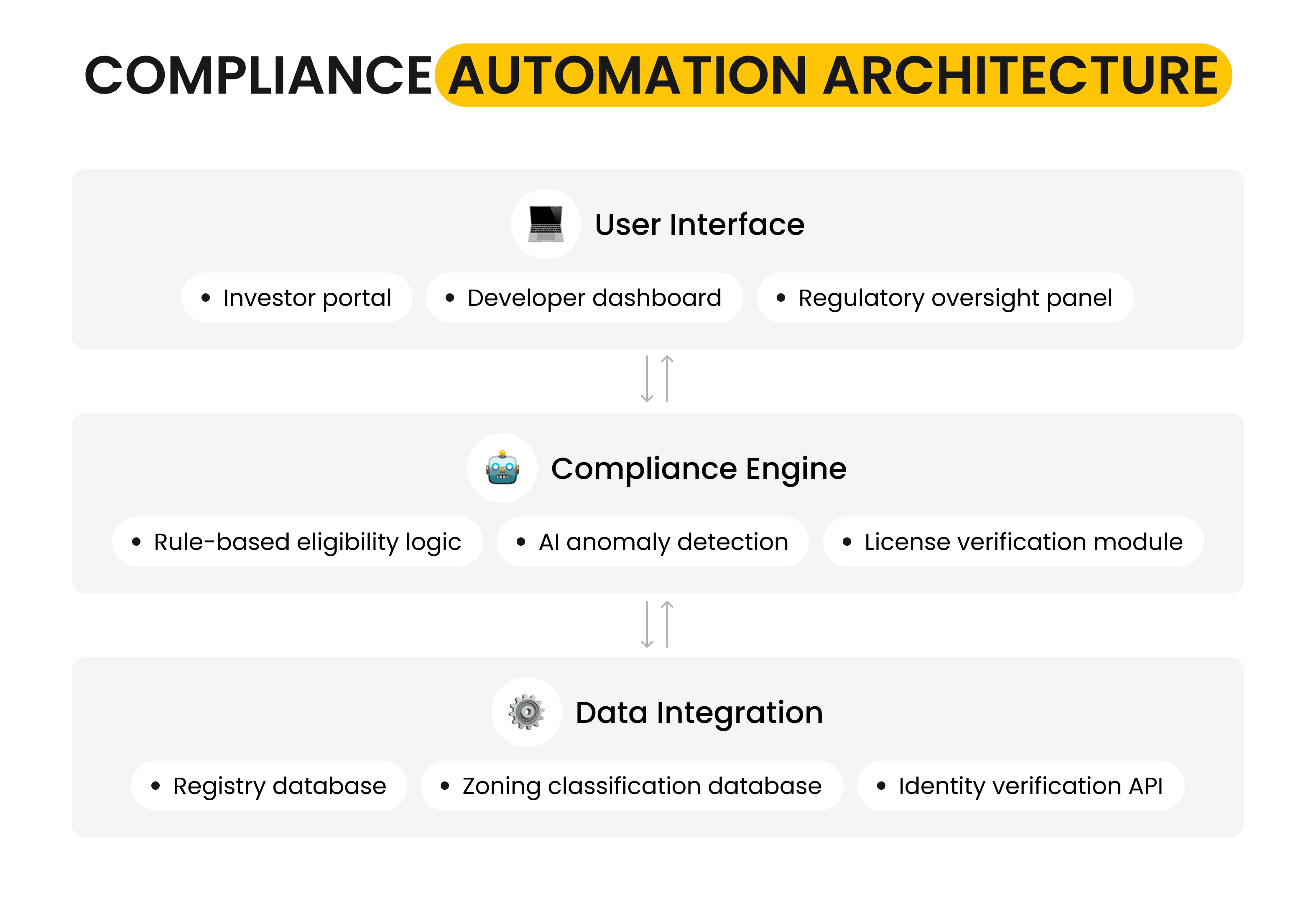
This is where real estate compliance software and compliance management software become foundational. These platforms embed regulatory logic directly into transaction pipelines.
Advanced systems increasingly incorporate AI-driven monitoring capabilities. An example of this direction is the concept of an AI Compliance Agent, which automates regulatory validation within operational workflows. Such tools reduce human error while maintaining audit traceability.
 Click to expand
Property & Zone Mapping Systems
The expansion of foreign property ownership Saudi Arabia requires clear geographic delineation. Investors must understand which zones permit foreign participation and under what conditions.
Property mapping systems integrate land registry data, zoning classifications, and licensing parameters into unified dashboards. These systems support both regulators and private investors by providing location-based compliance validation.
Mapping platforms also strengthen regulatory risk oversight by identifying exposure to regulatory restrictions or future policy shifts. When zone classifications change, digital systems must update automatically.
This level of synchronization requires integration between registry databases and digital mapping engines. The reform accelerates demand for geospatial accuracy, which is directly tied to provisions in real estate law.
Without a robust mapping infrastructure, compliance remains theoretical.
Secure Digital Title & Registry Solutions
The reform increases emphasis on centralized registries to support centralized data management across ministries and regulatory bodies. This creates demand for platforms that securely manage customer data alongside property records.
Secure registry systems must validate identity, transaction legitimacy, and regulatory eligibility simultaneously. Fragmented databases increase vulnerability.
This creates a natural market for custom real estate software that integrates registry logic, compliance controls, and digital verification tools.
As the revised ownership framework formalizes ownership rights, the digital layer must guarantee data integrity.
Digital registry modernization plays a pivotal role in reducing dispute risk. Historically, fragmented documentation systems create exposure to title conflicts and duplicate ownership claims. Under the updated regulatory framework, registry integrity is central to the credibility of enforcement.
Secure digital registry solutions must support identity verification, ownership lineage tracking, and compliance eligibility confirmation. These systems operate at the intersection of customer data protection and legal enforceability.
Modern registry architecture typically includes:
- Encrypted ownership records
- Multi-factor identity validation
- Immutable transaction logging
- Real-time eligibility cross-checking
- Integration with zoning databases
This creates an environment where centralized data management becomes not merely administrative but strategic. Fragmented registries weaken investor confidence. Unified systems strengthen market resilience.
The development of such platforms often requires custom real estate software tailored to national regulatory logic rather than generic off-the-shelf systems.
As cross-border participation increases, registry digitization becomes both a compliance safeguard and an enabler of investment.

Investor Portfolio Management Tools
Institutional participation increases complexity in asset oversight. Investors require platforms that consolidate property documentation, licensing records, and regulatory updates.
Portfolio management tools must integrate real-time validation against the evolving Saudi Arabia real estate law 2026 framework. Eligibility status, renewal deadlines, and zone compliance cannot remain static fields.
These platforms also improve oversight of real estate investments by combining financial metrics with compliance indicators.
Integrated dashboards reduce uncertainty and support faster decision-making. When portfolio systems link directly to regulatory validation engines, risk exposure declines. The reform, therefore, expands the intersection between investment analytics and regulatory validation.
Portfolio oversight can no longer operate independently from compliance validation.
Under the current regulatory framework, portfolio systems must integrate dynamic rule engines that automatically update eligibility status. Static compliance fields create blind spots.
Advanced portfolio tools increasingly incorporate:
- Zone-based eligibility tracking
- Automated renewal reminders
- Regulatory change alerts
- Risk-weighted asset classification
- Integration with regulatory validation platforms
This integration strengthens real estate risk management by identifying exposure to regulatory changes before they affect capital. For foreign participants, this digital transparency reduces uncertainty. It also enables more efficient scaling of property investment within the Kingdom.
Why Early Technology Adoption Will Be a Competitive Advantage?
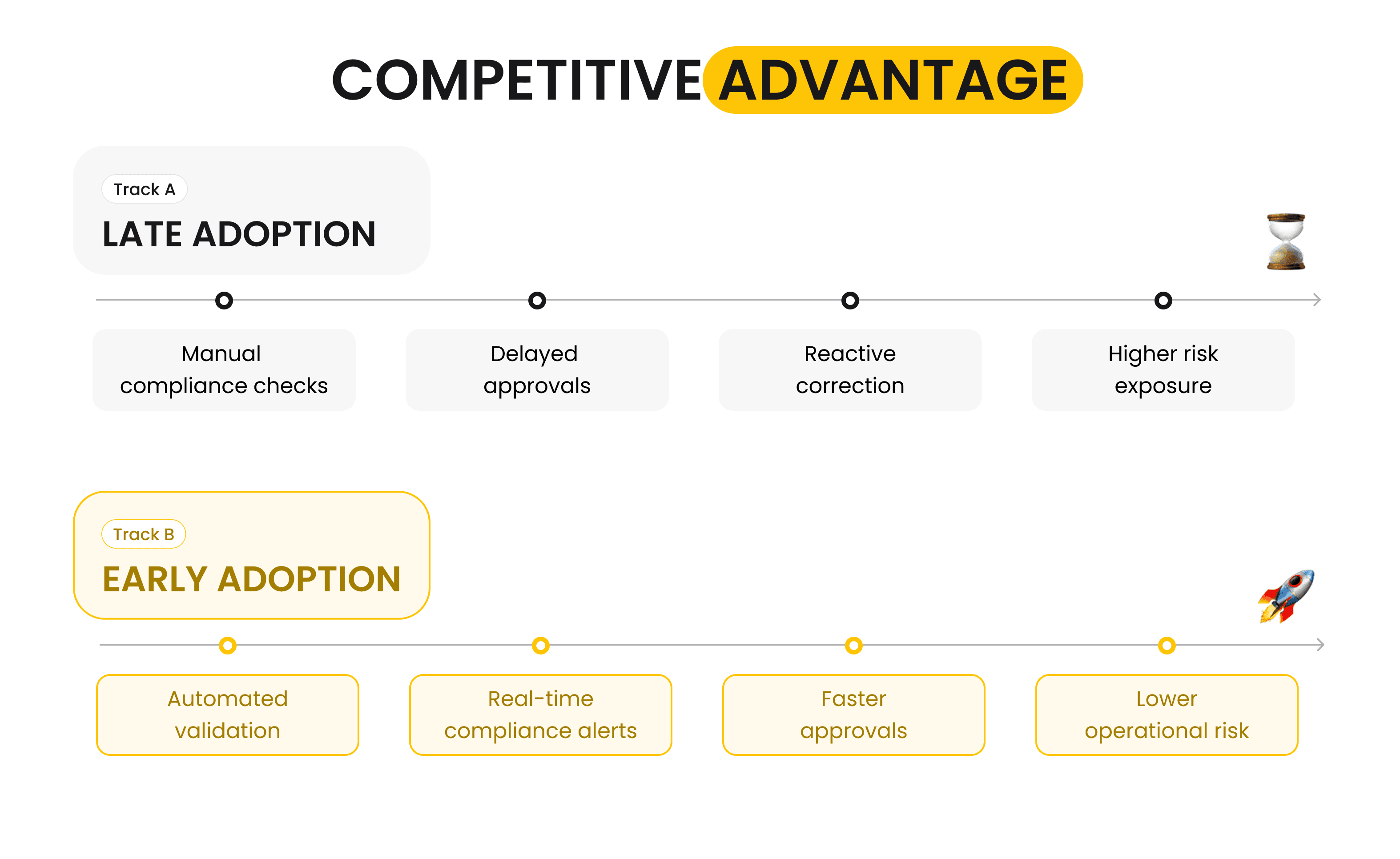
Early adoption creates structural efficiency advantages that compound over time. Late adoption forces reactive correction.
Technology-first operators can scale property investment within the Kingdom more efficiently by reducing friction in approvals and documentation errors. They also strengthen transaction risk exposure through proactive monitoring.
Artificial intelligence plays a growing role in this transformation. Advances in artificial intelligence in real estate allow predictive compliance checks, anomaly detection, and automated document validation.
 Click to expand
As regulatory clarity expands, competitive differentiation shifts from legal interpretation to technological execution.
The reform does not simply change ownership rules. It reshapes the technological backbone of the property market.
Those who treat the reform as a compliance burden will incur costs. Those who treat it as a catalyst for digital modernization will gain an advantage.
The competitive advantage created by early adoption is cumulative rather than immediate. Organizations that digitize compliance logic early reduce compounding operational risk.
Delayed adoption often leads to layered patchwork systems. Manual reviews coexist with partial automation. This hybrid structure increases cost and decreases reliability. Technology-first operators can embed regulatory intelligence directly into acquisition workflows. This reduces review cycles, accelerates transaction closure, and enhances investor reporting transparency.
Artificial intelligence in real estate amplifies this advantage. Predictive modeling can identify potential compliance conflicts before formal submission. Anomaly detection systems can flag documentation irregularities in seconds.
As regulatory ecosystems mature, capital increasingly favors organizations that can maintain consistent compliance performance. Legal interpretation becomes standardized. Digital performance becomes competitive leverage.
Early investment in automated compliance infrastructure and integrated registry platforms, therefore, functions as infrastructure positioning rather than short-term optimization.

Strategic Outlook
The modernization of property law establishes a structured, programmable governance environment. Predictable ownership rules and centralized oversight reduce ambiguity, but they also increase performance expectations for digital infrastructure.
Capital markets respond to enforceability and transparency. This strengthens long-term confidence in real estate investment. As registry systems, zoning frameworks, and compliance engines mature, investor confidence increases, and transaction cycles accelerate.
The reform, therefore, reshapes competitive dynamics. Legal clarity alone does not create an advantage. The ability to operationalize regulatory logic through scalable software systems does.
In this environment, governance and technology operate as interdependent layers of the same ecosystem.
Beyond immediate transaction efficiency, the reform has implications for long-term market design. As compliance logic becomes standardized, market participants begin competing on execution quality rather than regulatory interpretation. The differentiator shifts from legal navigation to operational sophistication.
Developers will increasingly structure projects around compliance efficiency. Site selection, partnership formation, and capital structuring decisions may factor in digital validation capability alongside financial metrics. This subtly changes project feasibility modeling.
Over time, regulatory agility becomes an asset. Markets that can update rule sets and propagate changes through digital systems quickly will adapt faster to macroeconomic shifts, foreign participation adjustments, or zoning reclassifications. The reform, therefore, lays the groundwork for adaptive governance rather than static oversight. The long-term consequence is ecosystem stabilization. When enforcement is consistent and digitally verifiable, speculative friction decreases. Institutional capital prefers environments where rules are durable, observable, and technically enforceable. For technology leaders, this creates sustained demand rather than short-term implementation cycles. Systems must evolve alongside regulation. Platforms must absorb legislative amendments without destabilizing operational workflows.
The reform thus signals not a single modernization wave, but an ongoing convergence between legal architecture and system architecture. Real estate markets increasingly operate as structured digital networks supported by sovereign regulatory frameworks.
In this context, software design becomes part of the economic infrastructure.
FAQ
What is the Saudi Arabia Real Estate Law 2026?
The Saudi Arabia Real Estate Law 2026 modernizes ownership regulations, expands foreign participation under defined conditions, and strengthens compliance and registry requirements across the Kingdom.
Will foreign property ownership be allowed in Saudi Arabia under the new law?
Yes. The updated framework permits structured foreign property ownership within designated zones and under regulated conditions.
How does the new real estate law impact real estate risk management?
The law increases emphasis on compliance verification, ownership validation, and regulatory oversight, making real estate risk management more dependent on digital tracking and monitoring systems.
Why is PropTech important after the Saudi real estate reform?
PropTech becomes essential because regulatory modernization requires automated compliance validation, secure registries, and integrated portfolio oversight tools.


YOU MAY ALSO LIKE





Get in Touch
Got no clue where to start? Why don’t we discuss your idea?

